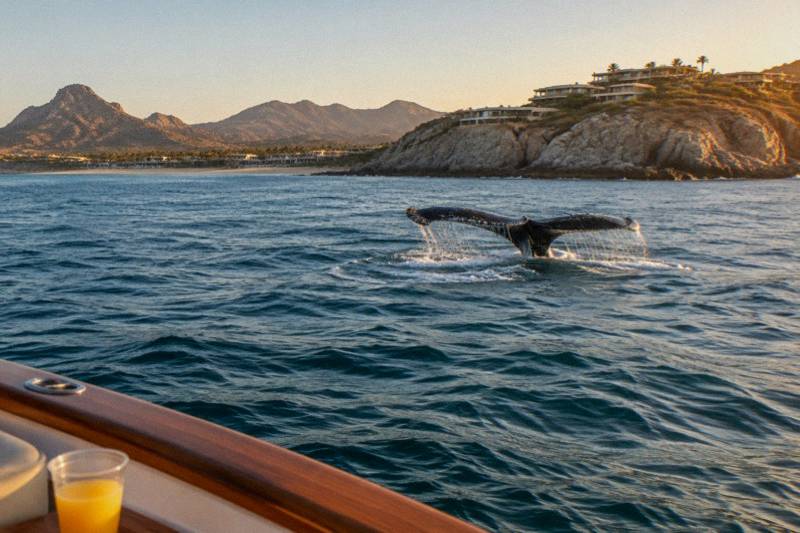
Whale Watching In Cabo San Lucas: Season, Boats And Sightings
Every winter, humpback whales arrive off the tip of Baja California Sur, and the boats of Cabo San Lucas go out to meet them. This guide lays out the season as operators report it, the whale cruises actually bookable from the marina, and how a whale trip pairs with a sunset departure.
Short answer
Operators and press reports put the 2026-27 whale season at 15 December to 15 April, with a peak from late January through February. Bookable whale cruises from Cabo San Lucas run about 2.5 to 3.5 hours; the firm-priced sunset whale cruise on this site starts from $109 per person. Federal rules keep boats at least 60 meters from whales, and sightings are never guaranteed.
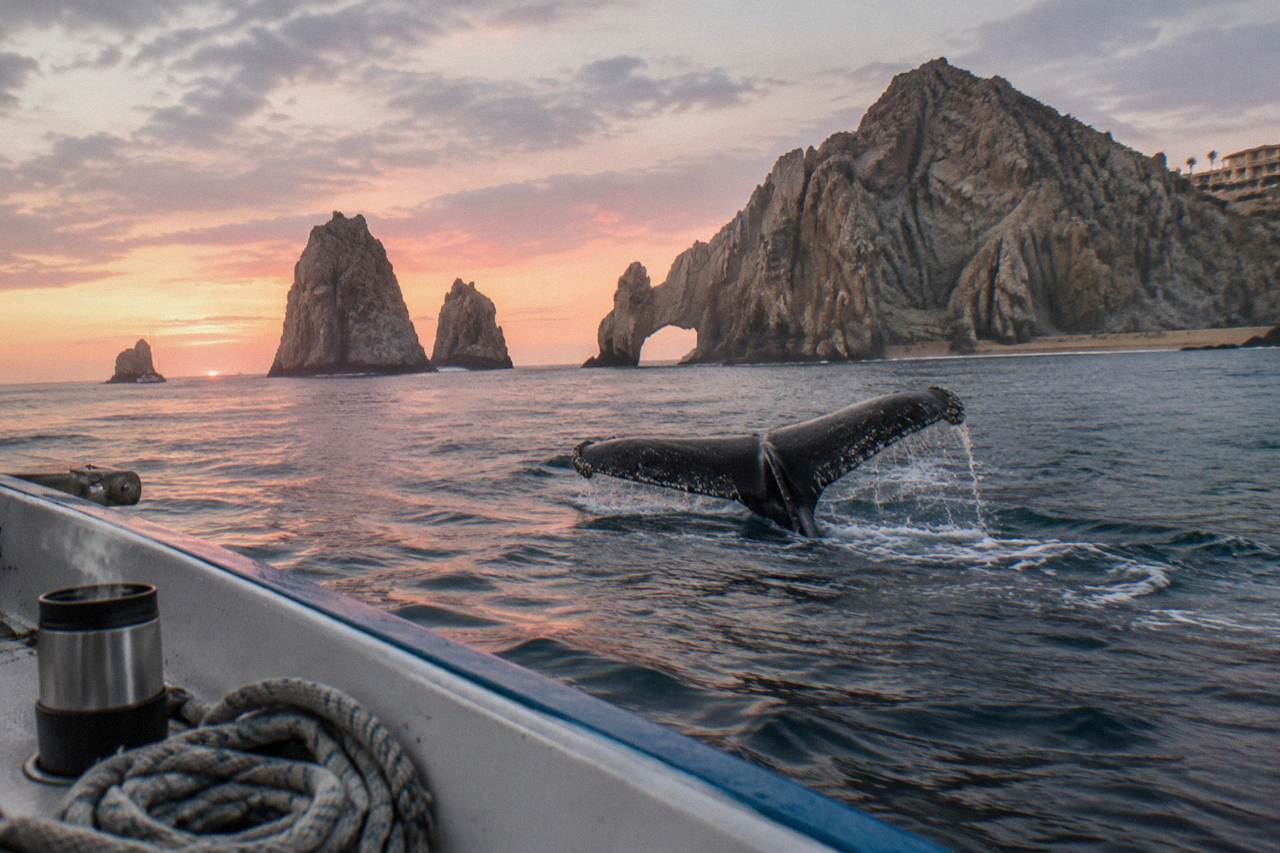
Every winter the same thing happens off Land's End: humpbacks that spent the summer feeding in the north arrive in the warm water of the Sea of Cortez and the Pacific side of Baja California Sur to breed and calve. The whales come close enough to the Arch that boats leaving the Cabo San Lucas marina often encounter them on ordinary sunset sails, not just dedicated whale trips. Nothing about a sighting is ever promised, but the season concentrates the odds in a way no other month does. If you're still working out when to plan your trip, the month-by-month guide to whale timing in Cabo San Lucas covers when humpbacks typically show up, when tours legally run, and which sunset cruises suit each stretch of the season.
This guide covers the season as local operators and guides report it, the three whale-focused cruises bookable through this site, what federal whale-watching rules mean for how close a boat may approach, and how a whale departure pairs with the broader sunset cruise fleet. Along the way it touches the sunset dinner cruise options in Cabo San Lucas for readers deciding between a wildlife trip and a meal on the water.
When Is Whale Watching Season In Cabo San Lucas?
Operators and guides report the whale season in Los Cabos as 15 December to 15 April, with the densest activity, including mothers with calves, reported from late January through the end of February.
The pattern behind that window is migration. Humpbacks travel from northern feeding grounds to the tropical water off Baja, and local reporting notes some animals may appear as early as late November even though dedicated tours concentrate between mid-December and spring. That early edge matters for holiday travelers: a Christmas-week trip is inside the season, but a Thanksgiving-week trip generally is not, and boats in November run as ordinary sunset cruises rather than whale trips.
Peak demand follows the peak animals. Local coverage of the coming season notes that popular dates around the holidays and into February fill early, and that booking ahead is the reliable way to secure a seat on a smaller boat. If your dates are flexible, late January and February bring the season's highest density of active whales and calves.
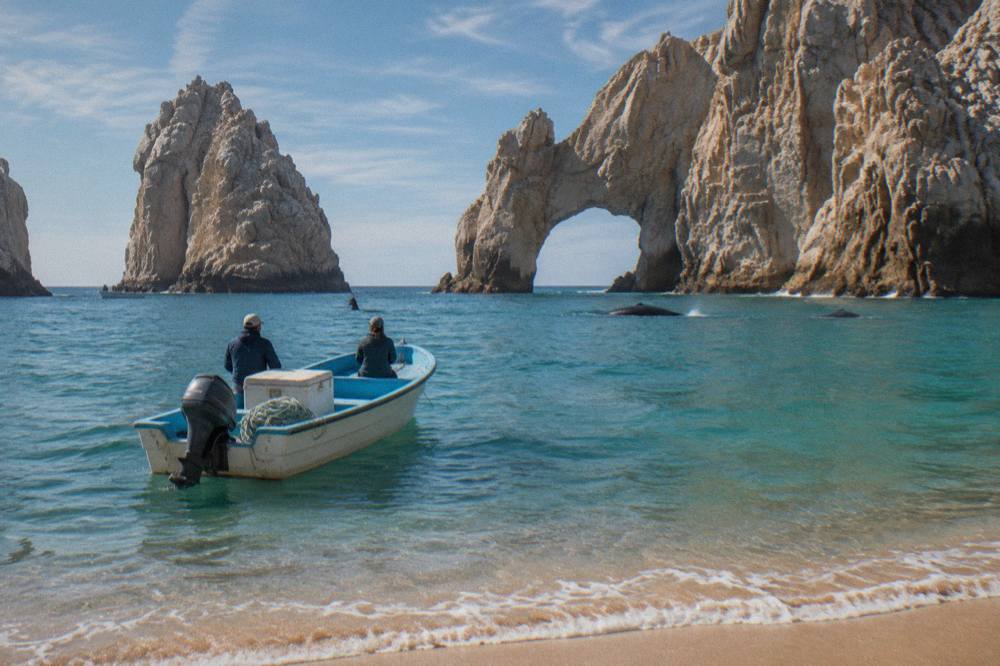
The season also shifts the sunset. In December the sun drops before 5:40 PM and daylight shrinks toward the winter solstice, so a "sunset" whale departure leaves the marina earlier than it would in summer. Our month-by-month breakdown of sunset times in Cabo San Lucas gives the full picture, but plan on mid-afternoon boarding in deep winter and a return to the dock by about 7 PM.
| Period | What operators and guides report | Planning note |
|---|---|---|
| November | Early individual humpbacks possible; tours not marketed as whale trips | Book an ordinary sunset sail, whales are a bonus |
| December | Season underway by mid-month; first mothers arriving | Holiday dates fill early, book ahead |
| January | Activity building toward peak | Strong demand around New Year |
| Late January to February | Peak reported density, adults active, calves present | The high-odds window |
| March | Still solid, numbers thinning late in the month | Spring Break dates busy |
| April | Season winding down; stragglers possible | Treat whale focus as optional |
Which Boats Run Whale Watching Trips From Cabo San Lucas?
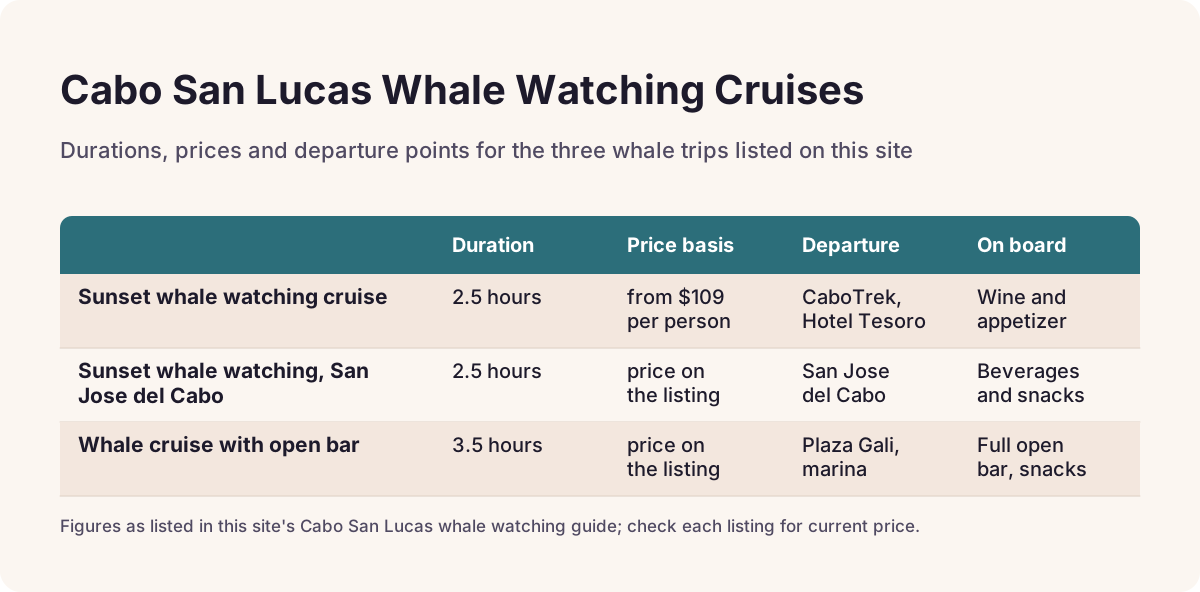
Three whale-focused cruises are bookable through this site: a 2.5-hour sunset whale cruise from the marina from $109 per person, a 2.5-hour trip departing San Jose del Cabo, and a 3.5-hour open-bar whale cruise from Plaza Gali. All are shared departures and all list free cancellation, though two of them have only a handful of reviews, so judge them on route, duration and inclusions rather than stars.
The firm-priced option is the sunset whale watching cruise in Cabo San Lucas: about 2.5 hours, departing from CaboTrek at Hotel Tesoro on the marina, with wine and an appetizer plus bottled water listed on board, and a private option available if you want the boat to yourselves. It is the closest thing on the roster to a classic whale trip, timed so the return leg catches the lowering sun. Before you commit to a boat, our honest breakdown of whether Cabo whale watching is worth the price weighs the season dates, ticket costs, and what the listings actually include.
The San Jose del Cabo departure suits readers staying on that side of the corridor. The third option is the longest: a 3.5-hour whale cruise from Plaza Gali on the Cabo San Lucas marina with a full open bar listed, beer, tequila, mezcal, spirits, sodas and juices, plus snacks.
Beyond the dedicated trips, the whole sunset fleet effectively becomes whale-adjacent in season. The most reviewed sailing on this roster, the Los Cabos luxury sunset sail rated 4.8 from 2,433 reviews, and the popular open-bar trimaran cruise rated 4.9 from 1,774 reviews from $69 per person, both pass the same stretch of water where whales surface in winter.
| Trip | Duration | Price basis | Departure | Listed on board |
|---|---|---|---|---|
| Sunset whale watching cruise | 2.5 hours | from $109 per person | CaboTrek, Hotel Tesoro, marina | Wine, appetizer, bottled water, snacks |
| Sunset whale watching, San Jose del Cabo | 2.5 hours | San Jose del Cabo | Beverages and snacks | |
| Sunset whale cruise with open bar | 3.5 hours | Plaza Gali, marina | Full open bar, snacks |
How Does A Sunset Whale Cruise In Cabo San Lucas Work?
A sunset whale cruise combines a wildlife loop with the classic sunset run: the boat leaves the marina mid-afternoon, spends the daylight hours in whale territory off Land's End and the Pacific side, then turns back toward the Arch as the sun drops. On this site's featured trip that means about 2.5 hours on the water with wine and an appetizer served on board, boarding at Hotel Tesoro on the marina boardwalk.
The practical rhythm matters more than the brochure. Whale-season sunsets in Cabo San Lucas run from about 5:33 PM in early December to about 6:40 PM by mid-April, so a sunset whale departure boards earlier than many visitors expect, often mid-afternoon when the light is still strong. That is a feature, not a bug: the whale-watching portion happens in full daylight, and the golden hour belongs to the return past the Arch and Lover's Beach.
Boarding itself is straightforward if you know the marina. Our Cabo marina boarding guide covers the dock layout, but the short version is that whale trips leave from the same cluster of docks and plaza-front berths as the rest of the sunset fleet, and you should aim to arrive 30 minutes early with your confirmation ready. The featured cruise lists free cancellation, as do the other two whale trips, which takes most of the risk out of booking a peak-February date months ahead.
One honest caveat: in the off-season, roughly May through November, a whale cruise is not a whale cruise. The listings define what is offered on any given date, and outside the reported December-to-April window these departures run as sunset sails with wildlife luck off the menu. If you are traveling in summer, a straight sunset product such as the jazz-and-wine cruise from $113 per person or the shared sailing yacht trip rated 4.9 from 821 reviews is the better fit, with any whale appearance an unscripted bonus guests occasionally report.
What Do Whale Sightings Actually Look Like From A Boat?
Sightings are never guaranteed, and no honest operator or listing will promise one; what guests commonly report in season is humpbacks surfacing to breathe in groups of one to three, tails lifting on deep dives, and, late in the season, mothers traveling with calves. Boats hold distance by law, so expect to watch behavior from tens of meters away rather than alongside the animals.
The behaviors are worth knowing in advance because they set expectations. A surfacing humpback typically shows a small dorsal fin and a burst of breath spray before sliding under; a fluke raise, the tail shot everyone wants, means the whale is diving deep and will likely be down for several minutes. Breaching, the full leap, is spectacular and reported regularly in the Sea of Cortez, but it is the exception rather than the schedule. Local guides note whales can even be visible from shore and from Pacific-side hotel balconies in season, which is a free way to scan before committing to a boat.
Photography advice follows from the distance rules. A long lens or a good phone zoom beats a wide shot, and the best frames usually come from shooting where the whale went down rather than chasing the splash. Late light helps: the low winter sun backlights breath spray beautifully on a sunset whale departure, one reason the open-bar whale cruise, a 2-hour sail inside a 3.5-hour outing that includes optional hotel transport, appeals to photographers.
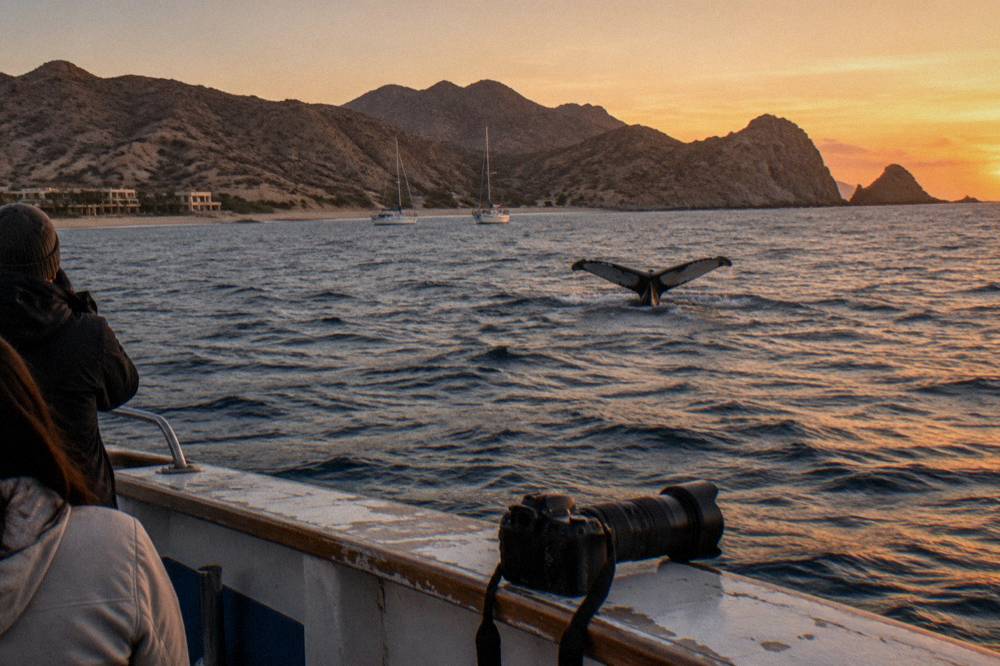
Sea conditions shape the experience as much as the whales do. Winter is generally the calmest season off Cabo San Lucas, which is why whale trips cluster there, but the Pacific side can still roll. Smaller vessels feel the swell more; if anyone in your party is prone to seasickness, a catamaran or mid-size boat, or medication taken before boarding, is the sensible call. Our what to wear and bring on a Cabo boat tour guide covers the layering problem, because winter evenings on the water cool quickly after sunset.
The San Jose del Cabo departure reports 5.0 from 41 reviews, a genuinely small pool; treat any single number lightly and read the recent text for what guests actually saw and how the crew handled a slow day.
How Close Do Boats Get To Whales Near The Arch?
Federal whale-watching rules reported for Los Cabos require licensed boats to keep at least 60 meters from whales, 80 meters from a mother with a newborn calf, to limit each encounter to about 30 minutes, and to approach slowly from behind rather than head-on. The waters around the Arch also sit inside a federally protected flora and fauna area with its own entry rules, so a whale trip near Land's End touches two layers of regulation at once.
The distance rules are the reason whale trips feel like watching rather than chasing. Local reporting on the season describes the approach limits and notes that licensed operators display an official flag and permit number at the marina; checking for that flag before boarding is the single easiest way to confirm you are with a compliant operator. Federal enforcement training for Baja California Sur operators has been reported by the federal environmental prosecutor's office, which documents good-practice training for whale watching operators in the state.
The protected area adds a fee. The Area de Proteccion de Flora y Fauna Cabo San Lucas, which covers the Arch, Lover's Beach and the surrounding waters, charges 125 MXN per person per day for entry, per the official CONANP page for the protected area, with exemptions for adults over 60, people with disabilities and children under 12, and discounts of 75 percent for students and teachers and 50 percent for Mexican nationals and residents with ID. A visible wristband is required. The CaboTrek sunset whale cruise lists marine park fees as included; the other two whale trips do not state it either way, so ask when booking.
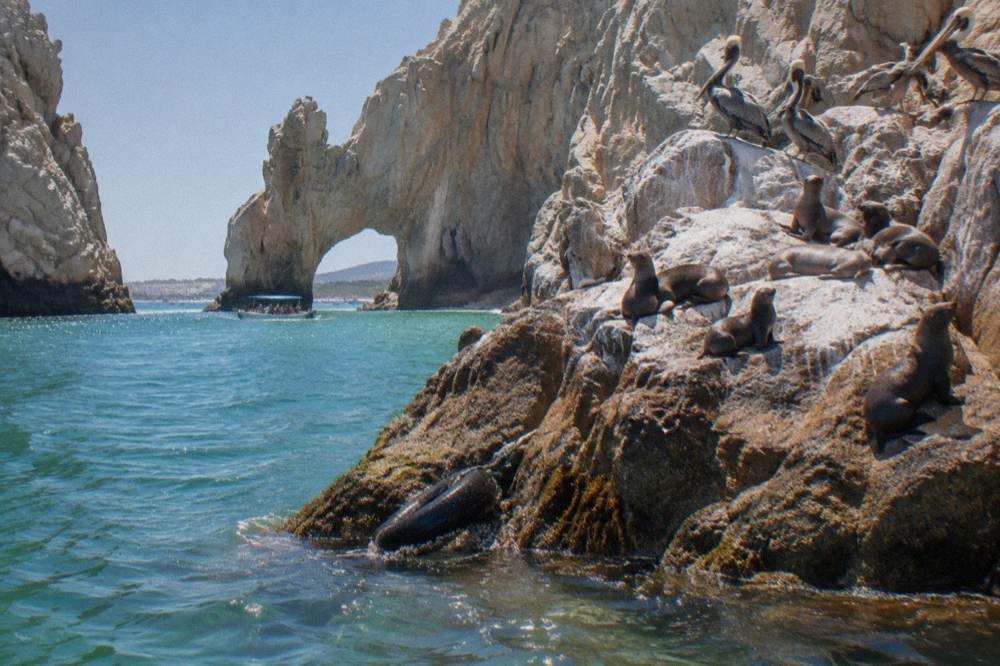
Swimming with whales is not offered, and no listing on this site implies it. Whale trips view the animals from the boat, full stop. The same protected-zone rules that govern whale approach also mean boats pass the Arch and the sea lion colonies at viewing distance, which pairs well with the sightseeing covered in our El Arco boat tour guide.
| Rule or fee | What applies | Who it affects |
|---|---|---|
| Whale approach distance | At least 60 m, reported; 80 m for mother and calf | All licensed whale tour boats |
| Encounter length | About 30 minutes maximum per group of whales, reported | All licensed boats |
| Protected area entry | 125 MXN per person per day, wristband visible | Most tours passing the Arch zone |
| Fee exemptions | Over 60s, people with disabilities, children under 12 | Proof requested at entry |
| Fee discounts | 75% students and teachers, 50% Mexican nationals and residents | Valid ID required |
| State tourist tax | 488 MXN per person, foreign visitors staying over 24 hours | Paid separately online, not a boat fee |
What Does A Whale Watching Trip In Cabo San Lucas Cost?
Add the 125 MXN protected-area entry if your operator does not include it, plus the 488 MXN Baja California Sur tourist tax for foreign visitors staying more than 24 hours, paid online separately from any tour.
Comparing value across the fleet is easier with the endpoints on the table. Shared sunset products on this site run from $38 per person for a one-hour Arch and sea lion boat tour up to $139 for the Pacific jazz-and-wine catamaran, with open-bar sails clustered between $60 and $96 and dinner cruises from $95 to $199. A whale-specific departure sits in the middle of that spread: you are paying for the season, the route and the crew's spotting, not for a longer ride.
The honest way to weigh a whale trip against a standard sunset cruise is by what you want from the water. The table below compares the experience types directly.
| Experience type | Typical price basis | What you are buying | Best for |
|---|---|---|---|
| Dedicated sunset whale cruise | from $109 per person, 2.5 hours | A route and timing built around reported whale activity | Travelers whose main goal is whales |
| Open-bar sunset sail | from $60 to $139 per person, about 2 hours | Drinks, snacks and the Arch at golden hour, whales as a bonus | Groups mixing wildlife hope with a party vibe |
| Sunset dinner cruise | from $95 to $199 per person, 2 to 3 hours | A seated meal with live music or a show | Couples, families with hungry teenagers |
| Private yacht charter | from $799 to $1,148 per group, about 3 hours | Private yachts from $799 for up to 20, one for up to 4 | Proposals, birthdays, flexible whale chasing within the rules |
If whales are only one item on your list, our guide to the best excursions in Cabo San Lucas shows how these sunset options stack up against other tours for your travel style.
Two money notes unique to the region. The state tourist tax, called Embrace It, is not a tour fee and not the Quintana Roo system sometimes confused with it; foreign visitors staying more than 24 hours pay 488 MXN per person online and carry a QR code, per local reporting that also covers the season's booking rules and dates. And peak whale dates are among the first to sell out, so the cheaper move is booking early, not waiting.
Can You See Whales From Medano Beach Or The Shore?
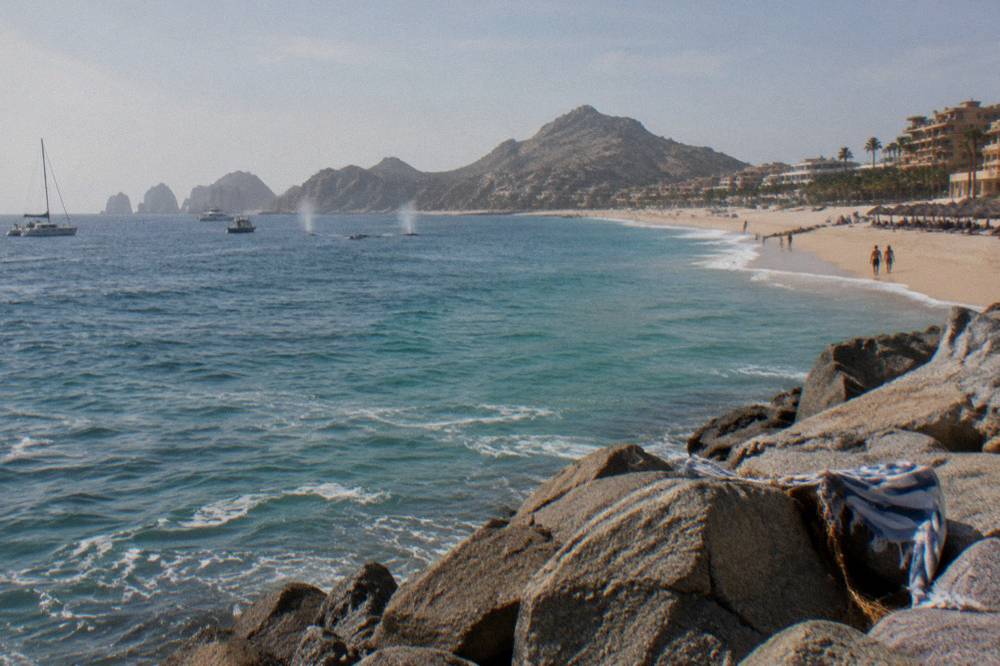
Yes, in season and with luck: local guides report humpbacks visible from shore, especially from Pacific-facing vantage points and balconies near Land's End, with no boat required and nothing guaranteed. A dedicated whale cruise raises your odds by putting you within legal viewing distance of reported activity, but the free shore option is real, and Medano Beach plus the public marina boardwalk cost nothing to wander.
The shore option follows geography. Whales concentrate around the tip of the peninsula and the Pacific approaches, so the closer your vantage is to Land's End, the better. The cliffs and hillsides above Pedregal look straight down the Pacific lane; Medano Beach, inside the bay, offers a softer version with the beach club infrastructure that makes an hour of horizon-scanning pleasant. Bring binoculars and scan for breath spray, which shows up against the dark sea better than a body does.
Timing your shore watching works the same way as timing a boat. The reported peak of late January through February is when scanning pays off most often, and midday light, flat and glare-heavy, is the worst window, while early morning and late afternoon improve contrast. If you are pairing a beach day with a booked cruise, scan from the sand in the afternoon and let the boat take over as the light drops.
For readers building a whole day around the water rather than one departure, our things to do in Cabo San Lucas roundup and the free things to do in Cabo San Lucas guide cover the shore side, including the free Arch viewpoints. Every cruise on this site's roster is paid; the cheapest firm-priced boat product is the one-hour Arch and sea lion tour from $38 per person, a reasonable warm-up act for an evening whale cruise.
How Do You Pair A Whale Trip With The Rest Of A Cabo Week?
The cleanest pairing is one whale-focused departure early in your week and one different sunset format later: the whale cruise for the animals, then a dinner cruise, a jazz-and-wine sail or a private yacht for the occasion you are celebrating. Stacking two whale trips rarely adds much, since the same boats work the same reported waters on the same day, while a second format gives you a second kind of evening on the water.
The pairing logic is practical, not just aesthetic. Whale sightings depend on the day, so putting your whale cruise on day two or three of the trip leaves room to rebook on free cancellation if weather or a slow sea day argues for another try. Saving the celebration departure, a private yacht with dinner from $999 per group for up to 20 people, or the Mexican dinner cruise with live music rated 4.4 from 936 reviews, for later in the week means the trip ends on a planned high rather than a variable one.
Families and mixed groups can split formats deliberately. The pirate ship dinner show, rated 4.3 from 776 reviews from $99 per person, is built for kids in a way no whale trip is; a party-minded group may prefer the Pez Gato party cruise with unlimited drinks, rated 4.5 from 271 reviews from $82 per person, over a quiet wildlife watching loop. The whale cruise, with wine and an appetizer rather than a full bar culture, skews adult and unhurried.
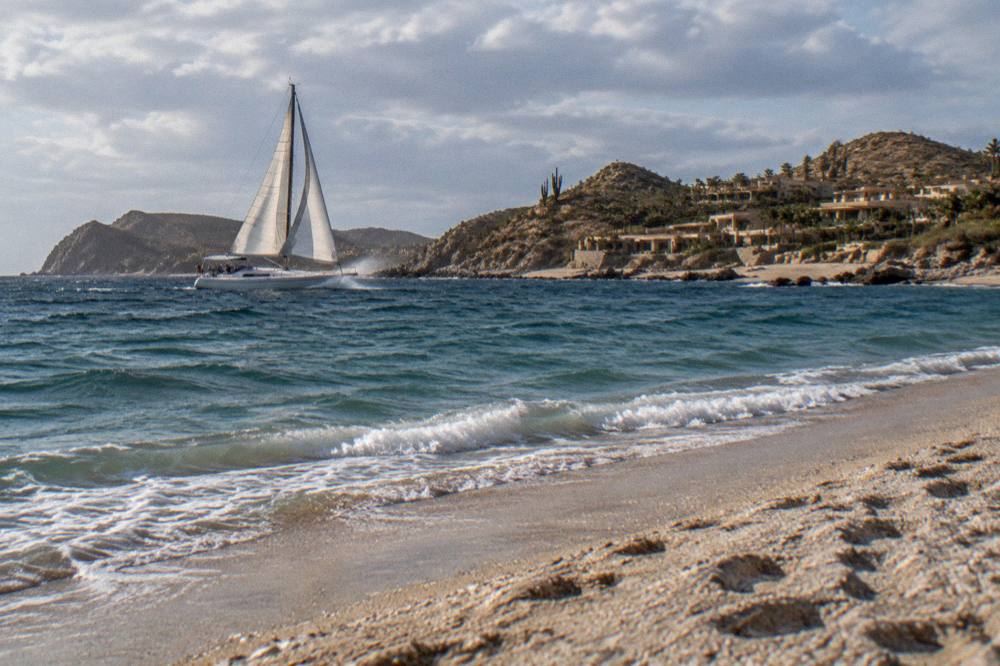
Weather is the wildcard that shapes every Cabo boat plan, whales included. The port can close to small vessels on a weather or hurricane alert, and tours then cancel or reschedule per the listing; that is routine in autumn and rare in the reported whale months, which is another quiet argument for a winter visit. Off-season travelers should read our best time to visit Cabo for boat tours guide before booking anything whale-branded in summer, when the boats listed on Cabo Sunset Cruises run the same routes as the sunset trips, with no whale promise attached.
Common Questions About Whale Watching In Cabo San Lucas
When is whale watching season in Cabo San Lucas?
Operators and guides report the season as 15 December to 15 April, with the peak, including mothers with calves, from late January through February.
Is a whale sighting guaranteed on a Cabo whale cruise?
No. Whales are wild animals and no listing on this site promises a sighting. What the whale cruises offer is a route, timing and crew built around reported whale activity inside the season, which raises your odds over an ordinary sunset sail without ever guaranteeing an encounter.
How much does whale watching in Cabo San Lucas cost?
The firm-priced sunset whale cruise on this site starts from $109 per person for about 2.5 hours with wine and an appetizer listed. Budget separately for the 125 MXN protected-area entry if your operator does not include it.
How close do the boats get to the whales?
Federal rules reported for Los Cabos require licensed boats to stay at least 60 meters from whales and 80 meters from a mother with a calf, with encounters capped at roughly 30 minutes. You watch behavior from a respectful distance; swimming with whales is not offered by any listing on this site.
Can you see whales from shore in Cabo San Lucas?
Yes, in season and without a guarantee. Guides report humpbacks visible from shore, especially from Pacific-facing vantage points near Land's End and from higher balconies. Late January and February are the best scanning months, and binoculars help more than luck does.
Is a whale cruise good for kids?
It depends on the child and the listing. The whale trips on this roster do not state an age limit, so check the listing before booking. Generally the 2.5-hour sunset whale cruise with wine and snacks suits patient school-age kids and adults better than toddlers, while the pirate ship dinner show is the family-oriented evening on the water.