Is Whale Watching In Cabo Worth It?
An honest look at whether a Cabo whale watching cruise earns its price: season dates, tour costs, boat rules, and what the listings actually include.
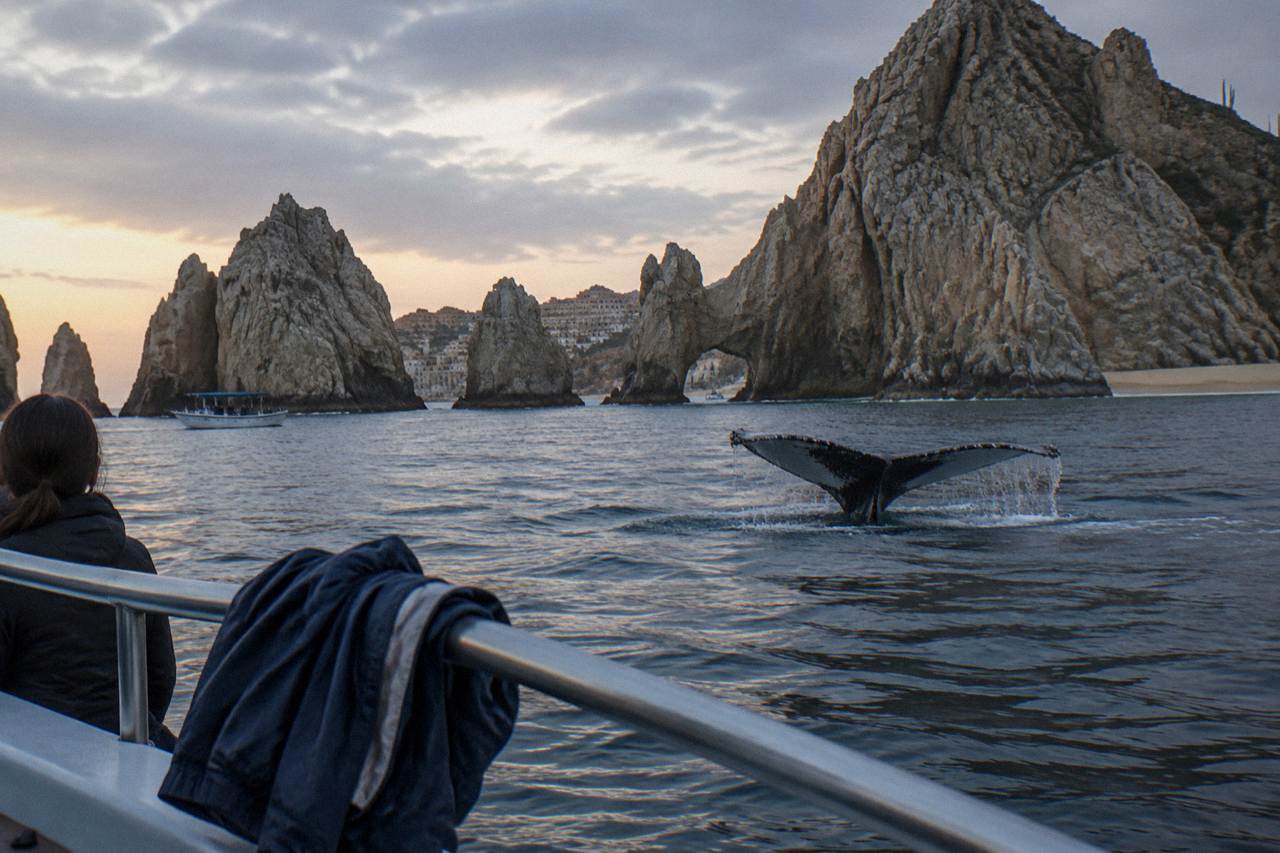
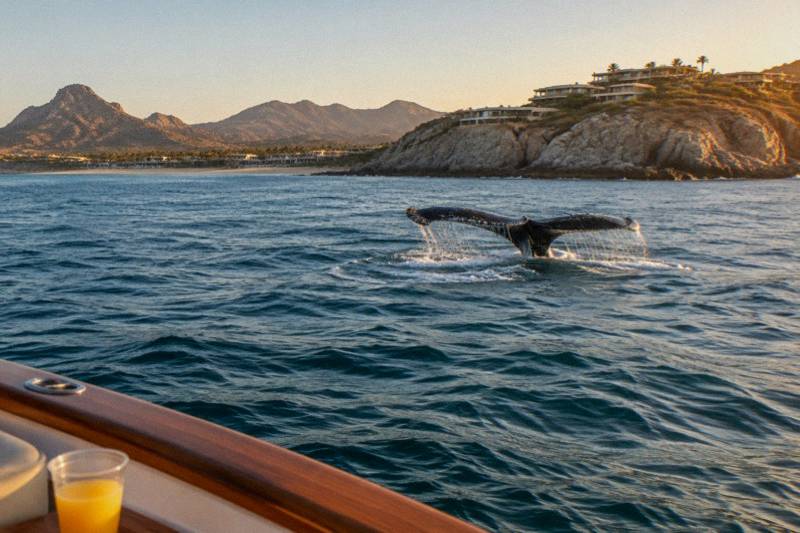
Yes: for most visitors traveling between mid-December and mid-April, whale watching in Cabo San Lucas is worth the money, because the season here is short, concentrated and genuinely seasonal, and outside that window a dedicated whale tour is not even permitted to run. Inside it, the experience stacks up well against year-round options like the open-bar sail, the dinner cruise or the pirate ship show.
The honest framing matters, because "worth it" is doing a lot of work in that question. Cabo San Lucas is a tender port surrounded by protected water at the tip of the Baja peninsula, and the whales that show up each winter are humpbacks migrating from northern feeding grounds. Operators and guides report the season runs roughly December to April, with local reporting for the 2026-2027 season citing December 15 through April 15 under federal wildlife rules, and a peak in late January through February. Nobody can promise you a breach or a tail fluke on any given trip, and any honest article has to say so up front.
What you are actually buying is a licensed boat, a crew that knows where the animals have been surfacing, and two to three hours on the water at the time of day you choose. The roster of whale-combo cruises on this site is small but telling: three listings pair the whale season with a sunset departure, including the featured Sunset Whale Watching Cruise in Cabo San Lucas, which runs 2.5 hours from $109 per person with wine and an appetizer on board. That price point sits between the basic open-bar sail from $69 and the fajitas dinner cruises from $99, which is roughly where the value question lives.
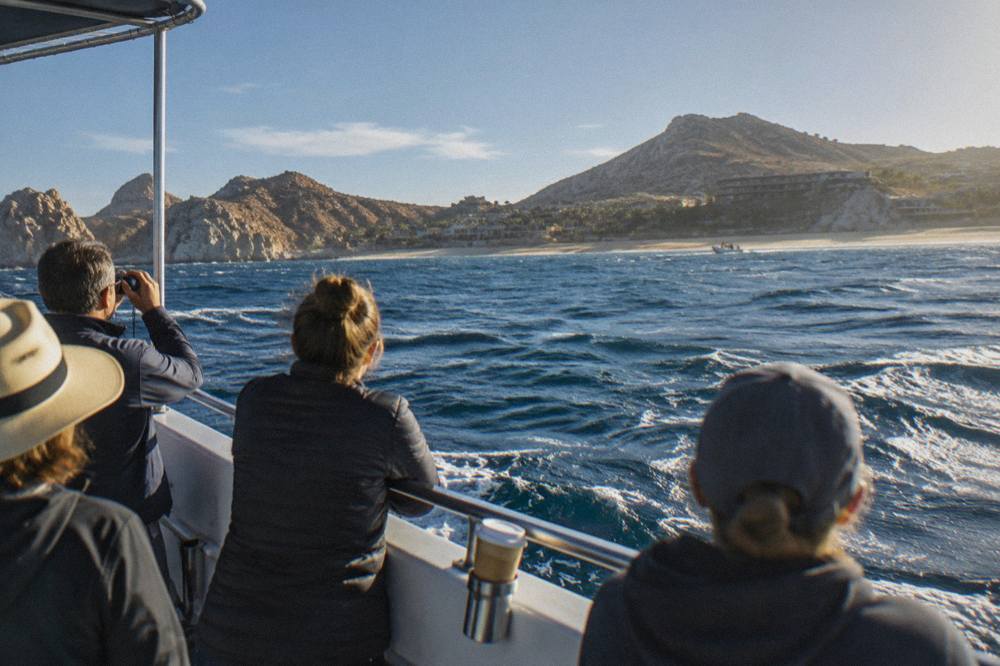
If you are already weighing a boat trip of any kind, the seasonal logic is simple. The catamaran, the pirate ship dinner show and the private yacht all sail in every month of the year. The whale cruises only exist as whale cruises for about four months. Scarcity is part of what you are paying for, and part of what makes the answer yes for most people in season.
For readers who want the full seasonal breakdown, the Cabo whale watching guide covers month-by-month planning in more depth.
When Is Whale Season In Cabo San Lucas?
Operators and local reporting place the Cabo whale season from mid-December to mid-April, with the 2026-2027 season reported as December 15 through April 15. The peak, when adult whales and new calves are most densely reported, falls in late January through February. Outside the season window, dedicated close-approach whale tours do not legally operate, so timing your trip is the single biggest factor in whether whale watching is worth it.
The calendar is not a marketing invention. Humpbacks may be spotted as early as late November in some years, but commercial whale watching tours are prohibited before the start, a detail local reporting covered ahead of the 2026-2027 season. The same reporting notes that popular dates, holidays, Presidents' Day and Spring Break among them, fill fast, and that operators were already taking bookings in October for the winter ahead. If your trip lands in the peak weeks, booking ahead is not paranoia, it is arithmetic.
What this means practically is that a February visitor and a June visitor are asking two different questions. The February visitor is choosing between a whale cruise, a sunset dinner cruise and a private yacht charter, all viable, all on the water at golden hour. The June visitor is choosing between the dinner cruise, the open-bar trimaran sail and the party catamaran, because the whale product simply is not there. The best time to visit Cabo for boat tours walks through that trade-off across the whole year.
One more seasonal detail worth knowing: whales are often visible from shore and from Pacific-facing resort balconies in season, especially near Land's End, according to local operator and guide sources. A cruise is not the only way to see a whale in Cabo, but it is the only way to see one from inside the protected bay with a licensed crew, and it pairs naturally with the Arch and the sea lion colonies that the El Arco boat tour covers from the water.
How Much Does A Whale Watching Cruise Cost?
The firm-priced whale listing on this roster starts at $109 per person for a 2.5-hour cruise with wine and an appetizer. Group charters sit far above all of it.
The table below is the complete whale-combo picture from the roster, exactly as each listing states it. Where a price is not advertised, it is not printed here, and no rating appears where the review pool is too small to support a star claim.
| Listing | Price | Duration | Rating | On board |
|---|---|---|---|---|
| Sunset Whale Watching Cruise in Cabo San Lucas | from $109 per person | 2.5 hours | too few reviews for a star claim | Wine, appetizer, bottled water |
| Sunset Whale Watching in San Jose del Cabo | 2.5 hours | 5.0 from 41 reviews | Beverages and snacks | |
| Los Cabos Sunset Whale Watching Cruise with Open Bar | 3.5 hours | too few reviews for a star claim | Full open bar, snacks |
Reading the table, three things stand out. First, the San Jose del Cabo departure is the only whale listing on the roster that leaves from the corridor town rather than the Cabo San Lucas marina area, which matters if you are staying down that end.
Against the rest of the fleet, the pricing logic is consistent. The basic open-bar sail runs from $69, the fajitas dinner cruises from $99, the luxury sailing sunset tour from $119, and private yachts from $799 to $1,148 per group. A whale cruise costs roughly a dinner cruise, which feels right: you are buying seasonality and wildlife attention rather than a buffet.
One cost nobody should forget: boats that approach the Arch and Lover's Beach area operate inside the Cabo San Lucas protected area, where the official entry fee is 125 MXN per person per day and a visible wristband is required, with exemptions for children under 12, adults over 60 and people with disabilities.
What Are The Rules That Protect The Whales?
Licensed boats must keep at least 60 meters from whales, 80 meters from a mother and calf pair, observe any pod for no more than 30 minutes, and approach slowly from behind at no more than 4 knots, under federal NOM-131 rules. Operators need a permit and must display it. These rules are why a compliant whale cruise feels calm rather than a chase.
The distances are not decorative. They exist because the Sea of Cortez and the Pacific around the cape are a nursery and corridor for humpbacks, and federal enforcement in Baja California Sur has included training and inspection rounds for tour operators. The practical upshot for you as a passenger: a licensed crew will idle, hold position and let the whales decide the distance, and the official flag or permit number displayed at the marina is your fastest verification that the boat follows the rules, as local season reporting advises.
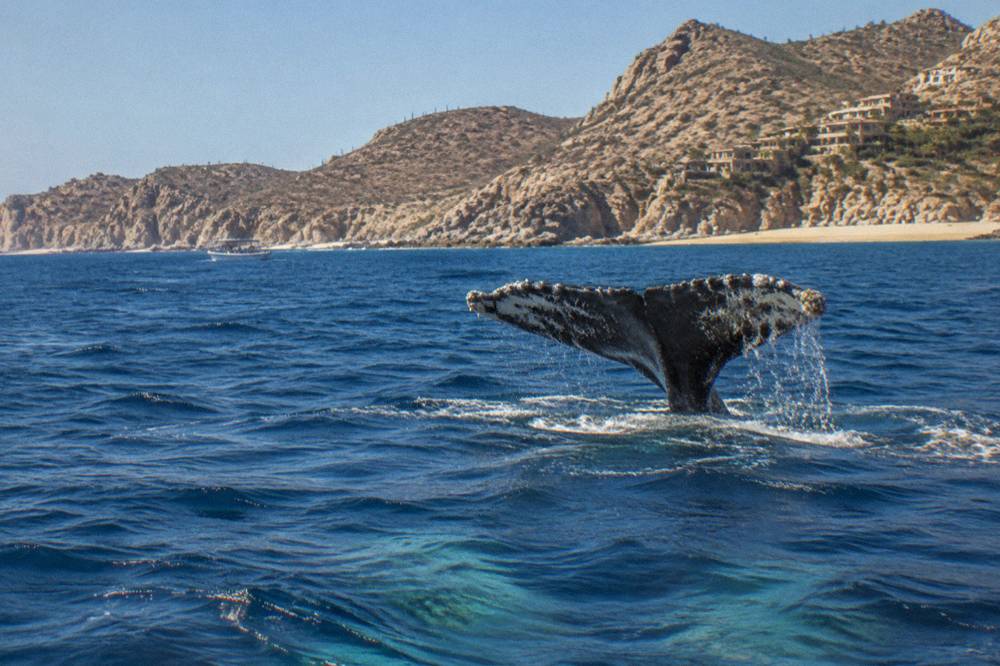
The rules also shape what kind of trip you can buy. Swimming with whales is not offered in Cabo, and no product on this roster implies it. Whale watching here is observation from the deck, which is one reason the sunset combo format works so well: the same protected water that holds the whales in winter also holds the Arch, the sea lion colonies and the Land's End cliffs that every cruise from the open-bar sail to the yacht charter visits. You can read the full wildlife and season detail in the best month to see whales in Cabo breakdown.
A note on the protected area itself: the CONANP page for the Cabo San Lucas flora and fauna protection area lists the daily fee, the discounts (75 percent for students and teachers with ID, 50 percent for Mexican nationals and residents) and the wristband requirement, and it is the authority on all of it.
What Is It Actually Like On The Boat?
A shared whale cruise in Cabo is a 2-to-3.5-hour trip with drinks and snacks, a crew scanning for surfacing whales, and stretches of open water between sightings. Seas are typically calmer on morning departures, and the same swell that closes small-vessel navigation in autumn can make any boat trip bumpy, so comfort depends more on the day than on the tour.
The experience is quieter than the party end of the fleet. Where the booze cruise is built around a DJ and drinking games and the pirate ship dinner show runs a scripted performance, a whale cruise is mostly standing at the rail, watching. Passengers on the featured listing get wine and an appetizer; the open-bar version pours beer, tequila, mezcal, spirits and juices for three and a half hours; the San Jose departure offers beverages and snacks. None of it is a dinner service, so eat before you board if the departure time crosses a meal.
| Trip style | Typical vibe | Firm price floor | Runs in whale season? |
|---|---|---|---|
| Whale sunset combo | Watching, drinks, golden hour | from $109 per person | Yes, that is the product |
| Open-bar trimaran sail | Drinks, snacks, social | from $69 per person | Yes, whales not the focus |
| Dinner cruise with live music | Buffet or fajitas, band | from $95 per person | Yes, whales not the focus |
| Pirate ship dinner show | Families, scripted show | from $99 per person | Yes, whales not the focus |
| Private yacht charter | Your group, your pace | from $799 per group | Yes, crew watches informally |
Weather is the honest wildcard. The port captain can close the marina to small vessels on a weather or hurricane alert, and boats resume once restrictions lift. Free cancellation is listed on all three whale combos, which is the right safety net for a weather-dependent purchase.
That weather dependency is also why some travelers split the difference. The Cabo Mar catamaran dinner cruise, from $104 per person with a Mexican buffet and an unlimited premium bar, gives you a full dinner and the same golden-hour water without betting the evening on a surfacing whale. It is the pragmatic alternative when the forecast looks mixed.
The seasonal bonus cuts the other way too. In peak weeks, whale sightings are commonly reported from ordinary sunset cruises that were never sold as whale trips, a fluke near the trimaran, a spout off the catamaran's bow. You cannot book that outcome, but it is part of why February departures across the whole fleet feel different from August ones.
Whale Cruise Or Regular Sunset Cruise: Which Should You Book?
Book the whale combo if you are traveling between mid-December and mid-April and wildlife is a priority; book a regular sunset cruise if you are outside that window, if you want dinner or a party format, or if a guaranteed-good evening matters more than a possible whale. The two products overlap on the water but sell completely different expectations.
The regular sunset fleet is bigger, cheaper at the entry level and available every day of the year.
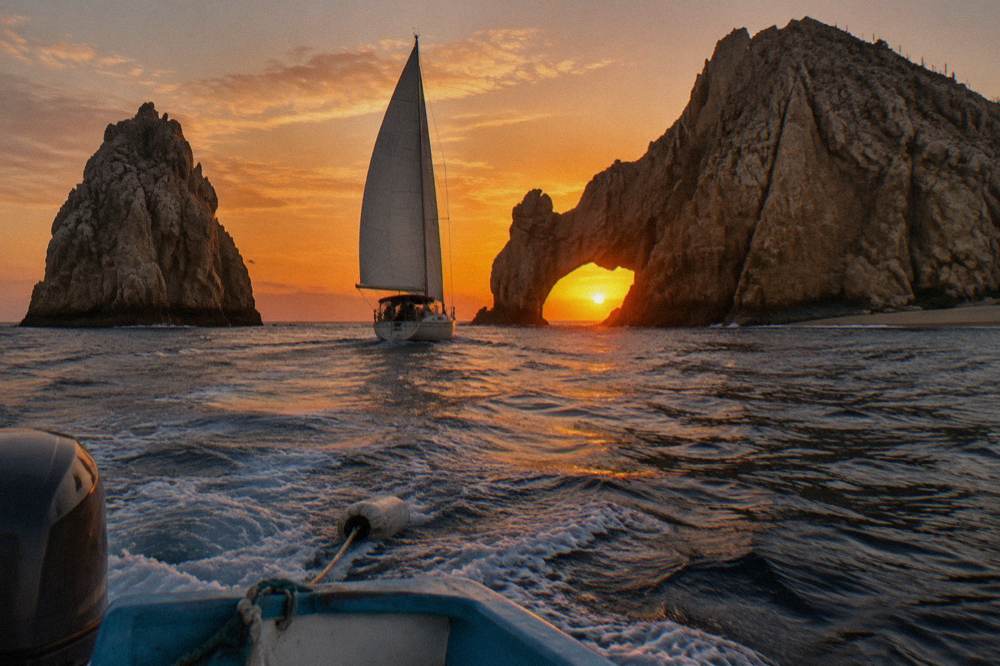
The whale cruise trades some of that polish for seasonality. Its review pools are small, which is a function of a four-month product, not necessarily of quality, and it costs about the same as a dinner cruise. What it offers that the sunset fleet cannot is intent: a crew actively working the whale grounds at the hour the light turns.
A reasonable split for a week-long trip is one of each. Take the open-bar sail or a dinner cruise early in the week as your guaranteed good evening, then put the whale cruise on the day with the calmest forecast. Because free cancellation is listed across the whale combos, you can hold the booking and let the weather decide. For what to pack for either, the what to wear and bring on a Cabo boat tour guide covers layers, biodegradable sunscreen and the rest.
What If No Whales Show Up?
No operator can promise a sighting, and this article will not either: whales are wild animals and success varies by day. What you can check before booking is the listing's own policy on missed sightings, since terms differ by product, and free cancellation is listed on all three whale combos on the roster. Read the terms rather than assuming a rebooking promise.
Some operators in Cabo advertise rebooking or refund terms when no whales appear during the season, and local guide sources describe sighting success as high in peak months, but a policy printed in one place does not transfer to another listing. The listing you actually book governs. That is the entire practical advice on this point, and it is worth two minutes of reading before you pay.
The other mitigation is structural. All three whale combos on this roster are sunset cruises first, which means the floor of the experience is the floor of every sunset cruise: the Arch, the sea lion colonies, the golden hour over the Pacific, drinks on the water. On a day when no whale surfaces, you still had a sunset cruise. That is a better worst case than most wildlife tours anywhere can offer, and it is the strongest single argument that the whale combo format, specifically, is worth it.
So Is A Cabo Whale Cruise Worth The Money?
For a visitor in season who has never watched humpbacks from the water, yes, and comfortably so: at from $109 per person the firm-priced combo costs about a dinner cruise, includes drinks, and doubles as a sunset trip past the Arch. For an off-season visitor the question is moot, and for someone who cares mainly about dinner or a party, the regular fleet is the better buy. Know which traveler you are and the answer settles itself.
Scarcity does a lot of the work. You can take the jazz and wine cruise or the pirate ship any month of the year; the whale window is roughly a third of the calendar. The rules protect the animals and, quietly, the experience, because a boat that idles at distance is a boat you actually want to be on. And the sunset-combo format means the product's worst case is still a product you wanted anyway. The whale listings are the closest thing Cabo has to a seasonal specialty, and seasonal specialties are usually what a trip is remembered by. For everything else on the water, from the trimaran sail to the yacht charter, Cabo Sunset Cruises compares the full roster, and the what happens on a sunset cruise in Cabo walkthrough covers the standard evening format these combos build on.
Common Questions About Whale Watching In Cabo
Is whale watching in Cabo worth it?
For most visitors between mid-December and mid-April, yes: the season is short and concentrated, the firm-priced combo starts at $109 per person, and the sunset format means even a quiet trip is still a sunset cruise past the Arch. Outside the season window, dedicated whale tours do not run.
When is whale season in Cabo San Lucas?
Operators and guides report roughly December to April, with the 2026-2027 season cited as December 15 through April 15 and a peak in late January through February. Humpbacks may appear in late November, but commercial whale tours are not permitted before the start.
How close do the boats get to the whales?
Federal NOM-131 rules require licensed boats to stay at least 60 meters from whales and 80 meters from a mother with a calf, with a 30-minute observation cap per pod and slow approaches from behind. Compliant operators display a permit flag at the marina.
Can you swim with whales in Cabo?
No. Swimming with whales is not offered, and no listing on this roster implies it. Whale watching here is observation from the deck of a licensed boat.
Do whale watching cruises in Cabo guarantee a sighting?
No operator can guarantee wild animals. Check the specific listing's terms on missed sightings before booking, since rebooking and refund policies differ by product. Free cancellation is listed on all three whale combos on the roster.