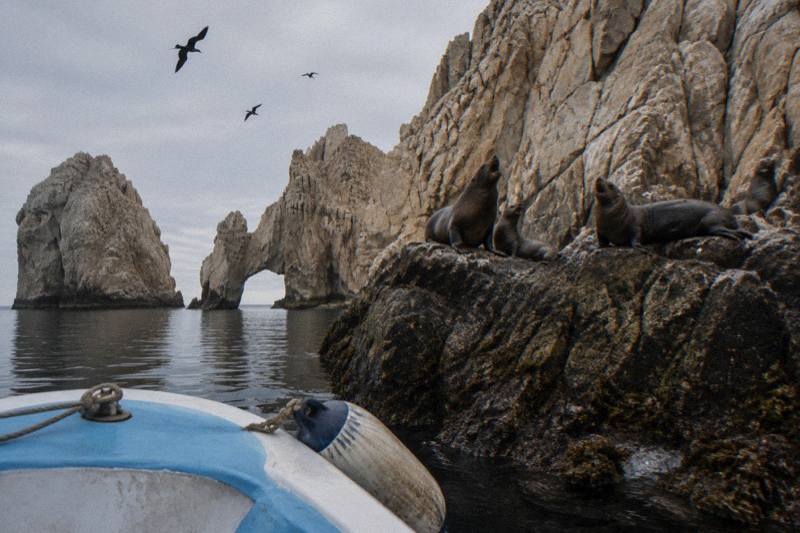
El Arco Boat Tour: How To See The Arch From The Water
El Arco, the granite arch at the tip of the Baja peninsula, has no road, no trail and no land access. Every visit is a boat ride, and the choice of boat, timing and landing shapes what you actually see.
Short answer
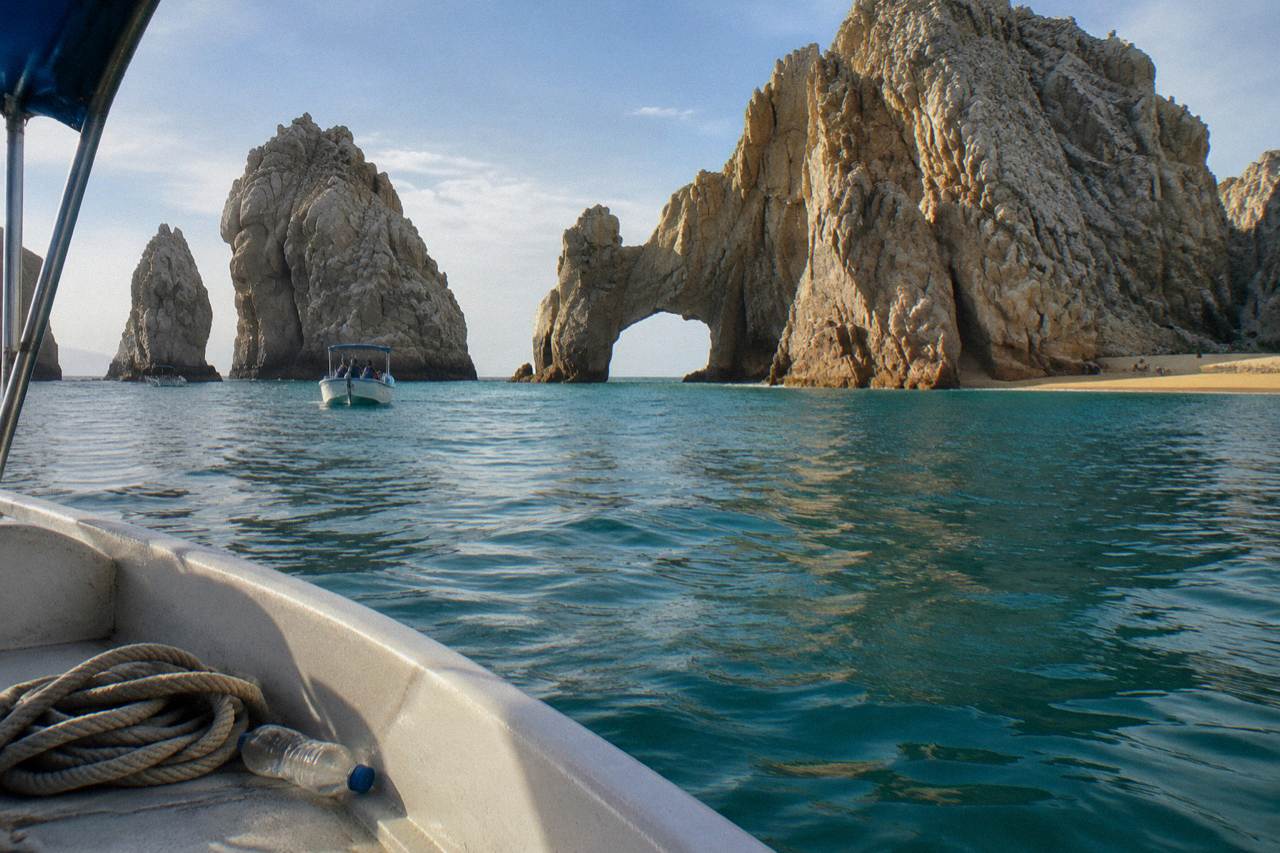
An El Arco boat tour from Cabo San Lucas runs from $38 per person for a 1-hour shared boat trip with sea lion spotting up to around $139 for a jazz-and-wine catamaran. The arch sits inside a federal protected area with a 125 MXN per person daily entry fee, and Lover's Beach is reachable only by water on calm days.
El Arco is a granite formation at Land's End, the southern tip of the Baja California peninsula, where the Sea of Cortez meets the Pacific. Current visitor guides and local reporting agree on one point that surprises many first-time travelers: there is no land route to it. Cliffs and private land wall off the whole headland, so Playa del Amor (Lover's Beach), Divorce Beach and the arch itself are reachable only by water taxi, tour boat or private charter. That single fact is why this page exists. The arch cannot be seen up close without a boat, so the decision a visitor faces is which boat, from where, at what time, and whether to land at all.
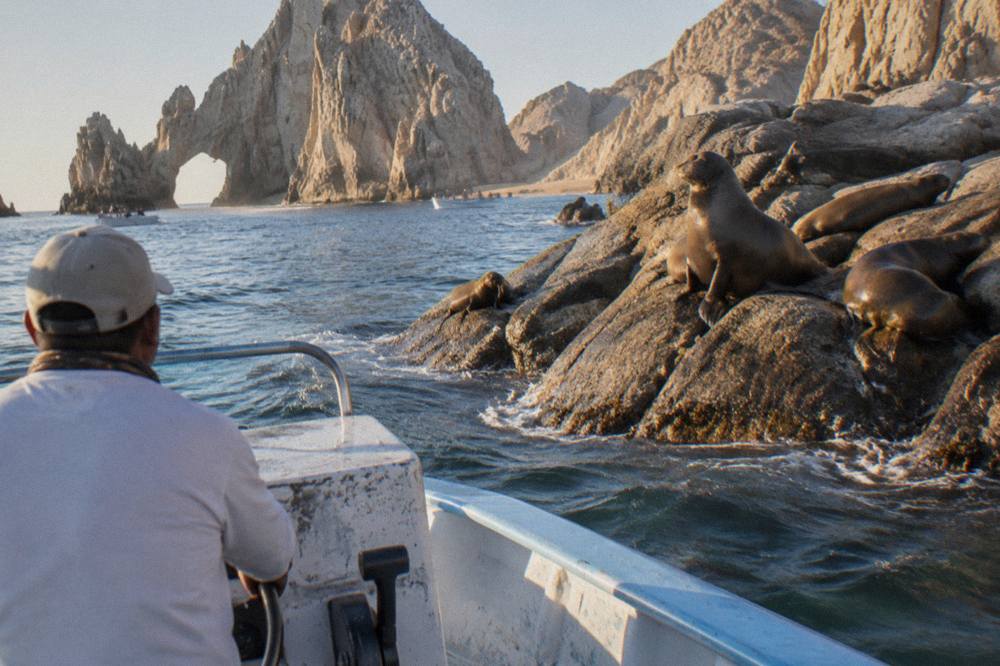
This guide walks through the routes from the Cabo San Lucas marina and Medano Beach, the Lover's Beach landing, the difference between the two sides of the arch, what a tour costs once fees are counted, and the rules that apply inside the protected area. Throughout, the options are tied to real bookable products: the 1-hour arch tour with sea lion spotting, the 2-hour open-bar trimaran cruise, the shared sailing yacht, the dinner cruises that pass the arch at dusk, and the private yachts that hold the same waters without a crowd. For the wider field, the Cabo boat tours compared guide lays out the full roster side by side, and Cabo Sunset Cruises covers the sunset half of the market this site is built around.
Why Can You Only See El Arco From The Water In Cabo San Lucas?
The headland around El Arco is sealed off by sheer cliffs and privately held land, and every 2026 source on the beaches confirms that access to Playa del Amor, Divorce Beach and the arch is by water taxi or boat only. There is no hiking trail, no road and no viewpoint drive. If you want the arch up close, a boat is the only way.
The geography explains it. Land's End is a jumble of granite boulders and cliffs dropping straight into the sea on both sides. On the Sea of Cortez side sits Lover's Beach, a small strip of sand sheltered from the Pacific; around the corner on the Pacific side is Divorce Beach, open to the swell. Between and behind them rise the arch and the Finisterra rocks. Local beach guides and 2026 reporting from The Cabo Sun describe the same access reality: arrange a round-trip water taxi from the marina or Medano Beach, and confirm your return pickup time in advance because there is no cell service on the beach. If you want the backstory before you board, the guide to why the arch became Cabo's most photographed landmark explains what the rock is made of and where to catch the best views from a boat.
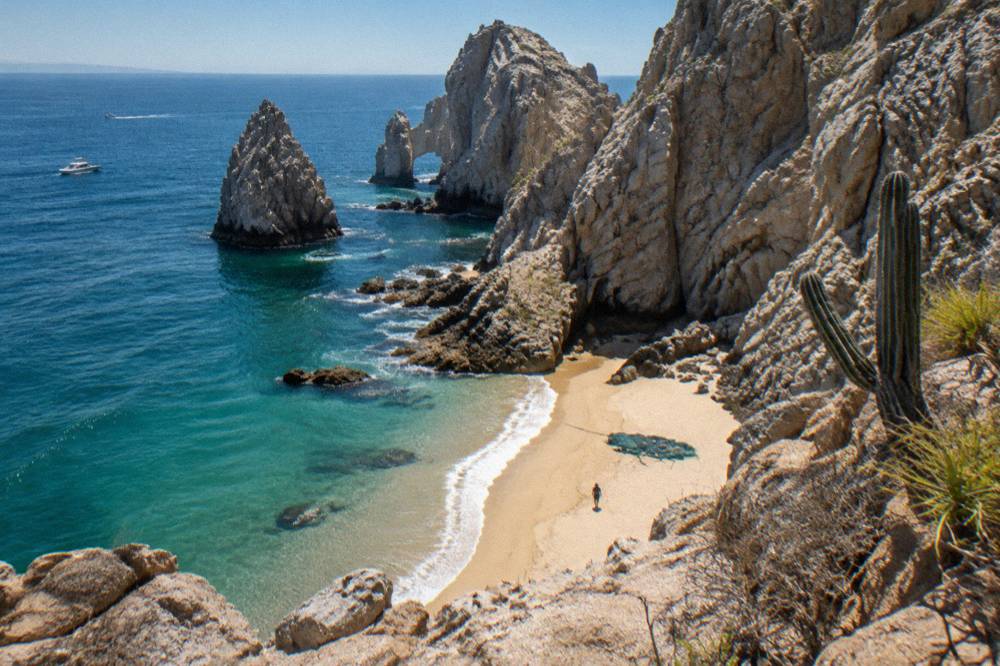
This is also why the arch anchors so much of the local boat industry. Nearly every cruise on this site's roster, from the $38 one-hour arch trip to the $999 private yacht, routes past Land's End. The open-bar trimaran cruise that departs Muelle Principal, the shared sailing yacht leaving F Dock, and the jazz-and-wine catamaran all list the arch as the scenic centerpiece. The formation functions as the harbor's natural turnaround point: boats leave the marina, round the point, view the arch and the sea lion colony from the water, and head back into the sunset.
One distinction matters before booking anything. Viewing the arch from the water and landing at Lover's Beach are two different activities with different rules. A cruise or tour gets you the close-up water view, the sea lions on the rocks and, in season, whales beyond the point. A water taxi gets you onto the sand. Some tours include a beach stop; most shared sunset cruises do not, because they are timed for the sky rather than the shore. The sections below treat them separately, because the fees, the risks and the best boats differ.
Which Boat Tours To The Arch Leave From Cabo San Lucas Marina?
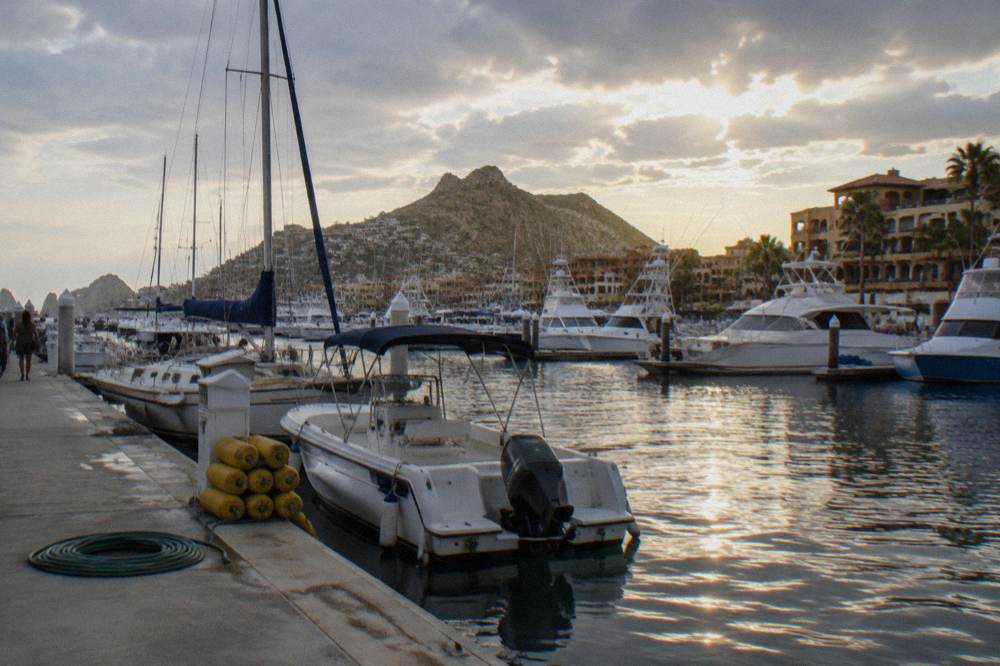
Most shared tours depart the Marina Cabo San Lucas area: the 1-hour El Arco boat tour leaves Muelle Privado 0 at Medano, the open-bar trimaran leaves Muelle Principal, the shared sailing yacht leaves F Dock, and the jazz catamaran leaves Plaza Gali. Prices run from $38 per person for the one-hour trip to $139 for the jazz-and-wine catamaran.
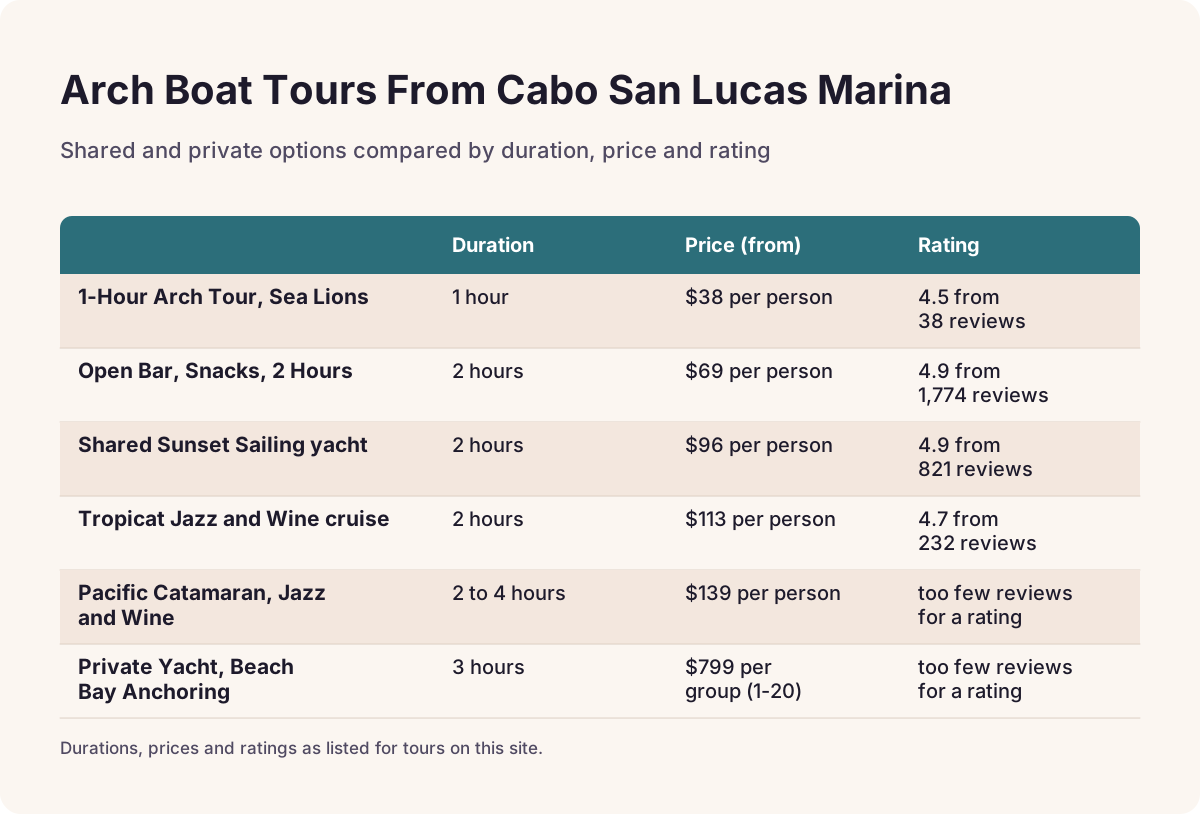
The marina is the hub, but the exact boarding points vary by product, and the roster is specific about each. The shortest option, the 1-hour El Arco sunset boat tour with sea lion spotting (4.5 from 38 reviews, from $38 per person), boards at Muelle Privado 0 in the El Medano Ejidal marina zone. The 2-hour open-bar trimaran cruise with snacks (4.9 from 1,774 reviews, from $69 per person) departs Cabo Blue Boat at Muelle Principal. The shared sunset sailing cruise (4.9 from 821 reviews, from $96 per person) leaves F Dock in the IGY marina, about 50 meters past Lorenzillo's restaurant. The Tropicat jazz-and-wine cruise (4.7 from 232 reviews, from $113 per person) boards at Plaza Gali on Blvd. Paseo de la Marina.
Beyond them, the roster fans out. Dinner cruises such as the Mexican buffet cruise with live music (4.4 from 936 reviews, from $95 per person) and the Cabo Mar catamaran (4.6 from 32 reviews, from $104 per person) pass the arch mid-route at dusk. At the top end, private yachts from $799 per group for up to 20 people, like the dinner-and-arch charter departing Chileno Bay or Santa Maria Bay, hold the same waters without sharing a rail with strangers.
| Tour | Duration | Price (from) | Rating | Boarding point |
|---|---|---|---|---|
| 1-Hour Arch Tour, Sea Lions | 1 hour | $38 per person | 4.5 from 38 reviews | Muelle Privado 0, Medano |
| Open Bar, Snacks, 2 Hours | 2 hours | $69 per person | 4.9 from 1,774 reviews | Cabo Blue Boat, Muelle Principal |
| Shared Sunset Sailing yacht | 2 hours | $96 per person | 4.9 from 821 reviews | F Dock, IGY marina |
| Tropicat Jazz and Wine cruise | 2 hours | $113 per person | 4.7 from 232 reviews | Plaza Gali |
| Pacific Catamaran, Jazz and Wine | 2 to 4 hours | $139 per person | too few reviews for a rating | Gali Plaza, near Sandos Finisterra |
| Private Yacht, Beach Bay Anchoring | 3 hours | $799 per group (1-20) | too few reviews for a rating | Chileno Bay or Santa Maria Bay |
Choosing among them comes down to three questions. How long do you want to be on the water, since one hour is enough for the arch and sea lions but not for a sunset? Do you want a drink in hand, since every cruise above the basic arch trip lists an open bar or drinks? If you are deciding between the cruise formats generally rather than for the arch alone, the catamaran tours guide and the sailing tours guide break those families down in detail.
Can You Land At Lover's Beach On An El Arco Boat Tour?
Some tours and every water taxi can put you on Lover's Beach, but landing depends on sea conditions, not the schedule. In October 2026 the port authority restricted disembarkation at Playa del Amor on a high-swell day, and boats view the arch from the water when landings close. Plan the stop as possible, never as promised.
Lover's Beach is the sand strip on the sheltered Sea of Cortez side of the headland, reached by a short run from the marina or Medano Beach. Shared sunset cruises generally slow down at the arch, circle the sea lion rocks and continue; they are built around the sky, not a beach hour. Water taxis are the dedicated landing service: 2026 reporting from The Cabo Sun puts the fair round-trip price at roughly $15 to $20 per person for a shared ride, and the same reporting advises confirming the exact price and your return pickup time before you step off, since there is no cell service on the beach. Fixed kiosks exist; touts on the boardwalk may start higher.
Conditions decide the rest. Local beach guides describe Lover's Beach as generally suitable for swimming and snorkeling on calm days, while Divorce Beach on the Pacific side carries strong currents and rip currents, with no swimming recommended. And swell can close the landing outright: in October 2026 the port authority restricted disembarkation at Playa del Amor under a yellow flag with Pacific navigation suspended, a reminder that high-swell days, most common in hurricane season, can prevent landing even when boats still run. The water taxi mechanics, negotiation tips and the walk between the two beaches are covered in full in the water taxi to Lover's Beach guide, which is the deeper dive if landing is the point of your trip.
A reasonable pattern for combining both halves of Land's End: book a late-afternoon arch cruise for the water view and the light, and either ride a water taxi to the beach earlier in the day or save the landing for a separate morning when the sea is at its calmest. The 1-hour sunset boat tour is tight on time for any landing; its value is the close pass by the arch and the sea lion colony, which the listing names explicitly. If a beach stop plus the arch is the goal, check whether your chosen listing includes a landing before you book, because inclusion varies product to product and only the listing states what is offered.
What Is The Difference Between The Pacific Side And The Sea Of Cortez Side?
The Sea of Cortez side of Land's End holds Lover's Beach, calmer water and the main snorkeling zone at Pelican Rock; the Pacific side holds Divorce Beach, bigger swell and the open sunset horizon. Beach guides describe the Cortez side as swimmable on calm days and warn of strong currents on the Pacific side.
The two sides of the arch are different bodies of water wearing the same rock. On the Cortez side, Pelican Rock is the primary boat-access snorkeling zone near the arch, with sea lions, tropical fish and rock formations in shallow depths, according to local dive and snorkel operators. That is also where the sea lion colony hauls out, and why the 1-hour arch tour bills sea lion spotting in its own name. The water here is what the protected-area designation is largely about: the CONANP page for the Area de Proteccion de Flora y Fauna Cabo San Lucas lists 3,996.05 hectares of continental waters, and Pelican Rock sits inside that zone with rules attached, biodegradable sunscreen included.
| Feature | Sea of Cortez side | Pacific side |
|---|---|---|
| Main beach | Lover's Beach (Playa del Amor) | Divorce Beach |
| Swimming | Generally suitable on calm days, per 2026 beach guides | Strong currents and rip currents; not recommended |
| Signature stop | Pelican Rock snorkel zone, sea lion colony | Open-ocean horizon, sunset views |
| Landing | Water taxi or tour stop, conditions permitting | Accessed by walking over from Lover's Beach; boats rarely land |
| Typical tour use | Snorkel trips, glass-bottom boats, arch viewings | Sunset cruises rounding the point for the horizon |
The Pacific side is where the sunset actually happens, and that shapes the cruise market. A sunset cruise that rounds Land's End turns its stern to the arch and faces open Pacific, which is why the jazz-and-wine catamaran and most open-bar sails time their departures to the season's sunset hour rather than to a fixed clock. Roughly speaking, listings shift from around 6 PM departures in summer to earlier hours as winter shortens the day; the general pattern in the sunset-times research matches what the cruise listings show. If your priority is the golden light on the arch itself rather than the open-horizon sunset, the Cortez side view comes earlier in the trip, on the outbound leg.
Practical takeaway: the sides are a five-minute boat ride apart, so every cruise gives you both in some form. The choice is really about emphasis. Swimmers and families lean Cortez, with Pelican Rock and the sheltered beach. Photographers and couples lean Pacific, with the horizon and the afterglow. And in whale season, roughly December to April as operators and guides report it, the Pacific side just beyond the point is where the boats watch for humpbacks; the whale watching guide covers that season in depth, and the roster's three sunset whale-watching combos, including a 3.5-hour open-bar cruise from Plaza Gali, are built around exactly that double bill.
How Much Does An El Arco Boat Tour In Cabo Cost?
Shared arch-focused tours run from $38 to about $139 per person on this site's roster, dinner cruises that pass the arch run from $95 to $199, and private yachts run from $799 to $1,148 per group; up to 20 on the $799 and $999 yachts, four on the $1,148. Add the 125 MXN per person daily protected-area fee where the listing does not include it, plus the 488 MXN Baja California Sur tourist tax for foreign visitors staying over 24 hours.
The sticker price is rarely the full picture. The roster's firm-priced shared options span a wide band: the 1-hour arch tour at $38 per person is the cheapest firm-priced listing on the site, the open-bar trimaran is $69, the sailing yacht $96, the jazz cruise $113 and the Pacific catamaran $139. A few listings carry price-on-the-listing status, among them the original sailboat cruise to the arch and the two whale-watching combos, and those print no number here; check the live listing for them. Private charters start at $799 per group for up to 20 people for the dinner-and-arch yacht and run to $1,148 for the 42-foot luxury yacht with snorkeling and lunch.
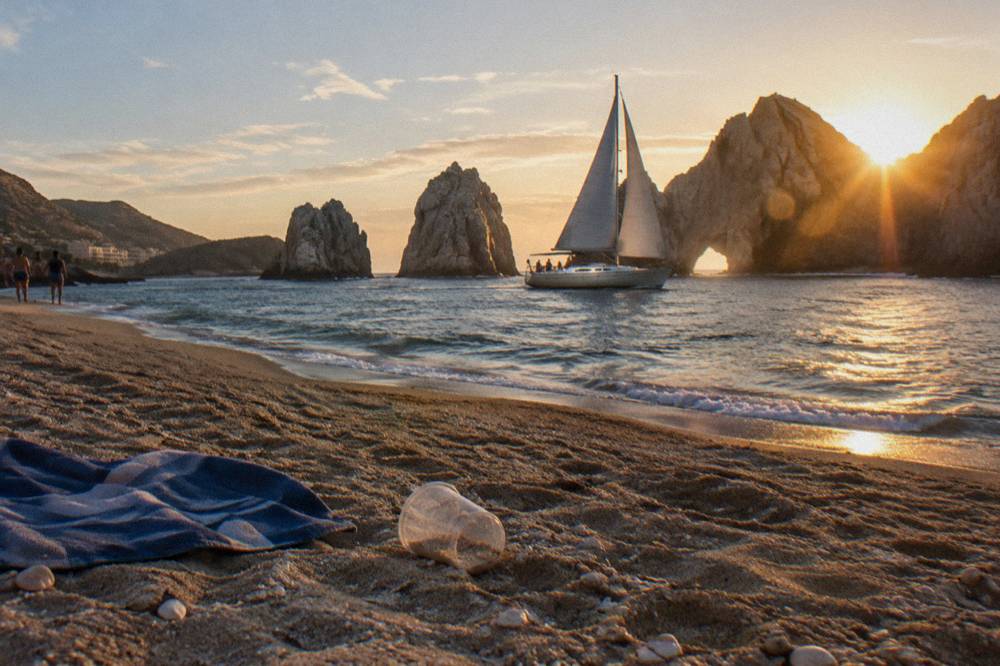
Two official charges sit outside the tour price. First, entry to the protected area: the CONANP page lists a 125 MXN per person per day fee, with exemptions for adults over 60, people with disabilities and children under 12, a 75% discount for students and teachers with valid ID, and 50% off for Mexican nationals and residents. Second, the Baja California Sur state tourist tax, called Embrace It, is 488 MXN per person for foreign visitors staying more than 24 hours, paid online separately from any tour. It is a state tax, not a booking fee, and it applies once to your stay rather than per activity.
Water taxi is the budget alternative if you only want the landing and will take the arch view from the sand. At the roughly $15 to $20 round-trip fare reported for 2026, plus the CONANP fee, a beach-focused visit can cost a fraction of a cruise, with the trade-off that you get no open bar, no sea-lion pass and no sunset horizon from the water. The full budget picture for the cruise side, including how the free activities in town stack up against the paid boats, is laid out in the free things to do guide, which is honest about the fact that every cruise on the roster is paid.
| Cost item | Typical figure | Basis |
|---|---|---|
| 1-hour arch boat tour | from $38 per person | roster, firm |
| 2-hour open-bar cruise | from $69 per person | roster, firm |
| Sunset dinner cruises passing the arch | $95 to $199 per person | roster endpoints, firm |
| Private yacht charter | $799 to $999 per group (up to 20); $1,148 per group (up to 4) | roster, firm |
| Water taxi round trip to Lover's Beach | roughly $15 to $20 per person | 2026 local reporting |
| CONANP protected-area entry | 125 MXN per person per day | official CONANP page |
| BCS tourist tax (Embrace It) | 488 MXN per person, foreign visitors over 24 hours | official state portal |
Once you've settled on a tour, our guide to reaching Lover's Beach and El Arco by boat explains what the protected-area fee covers, swimming conditions, and how much time you get ashore.
For raw value, the one-hour trip plus a separate water-taxi landing can cost less than a single dinner cruise and still deliver the arch twice, from the water and from the sand. For a special evening, the dinner cruises fold the arch, the meal and the sunset into one ticket. The how much is a sunset cruise in Cabo post carries the full price anatomy if you want to go deeper on the cruise side of the ledger.
When Is The Best Time Of Day To See The Arch In Los Cabos?
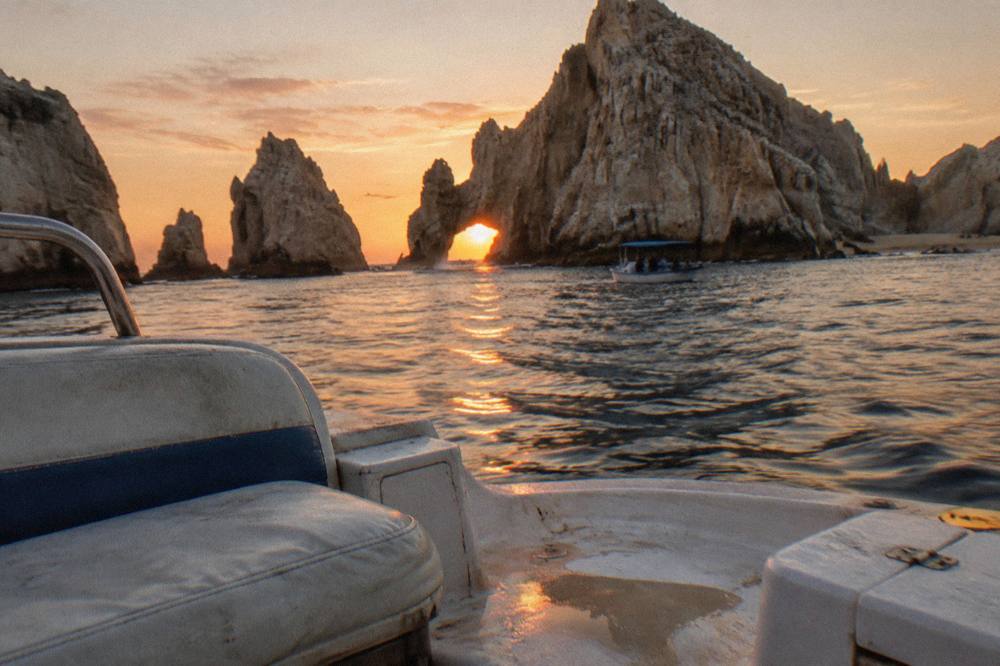
Late afternoon is the classic slot, because cruise departures are timed so the arch pass happens in golden light before the Pacific sunset, around 5:49 PM in mid-October 2026 and as early as 5:33 PM by December 1. Morning is the calmer, cooler alternative for landing at Lover's Beach and snorkeling Pelican Rock.
The sun does the scheduling. Cabo San Lucas keeps Mexican Pacific Standard Time year-round with no daylight saving shift, so sunset drifts through the seasons without clock-change jumps: the sunset-times research puts it near 5:49 PM on October 20, 2026, about 5:33 PM on December 1, and back later through spring. Golden hour runs roughly 40 to 48 minutes depending on the month, and civil twilight ends about 20 minutes after sunset in late October. Cruises aim their arch pass inside that window, which is why winter departures run earlier than summer ones across the listings.
Morning has its own case. The sea is often calmer early, which matters for the Lover's Beach landing and for snorkeling at Pelican Rock, and the rocks are backlit rather than silhouetted, a different photograph entirely. Crowds thin too: local reporting on marina congestion notes the boardwalk heaviest from late morning to mid-afternoon on cruise-ship days, so an early water taxi or a midweek morning tour dodges the worst of it. The trade-off is that a morning trip gives you the arch without the sunset, which for many visitors is giving up the main event.
| Timing | What you get | What to watch |
|---|---|---|
| Early morning | Calmest sea, best landing odds at Lover's Beach, snorkel light at Pelican Rock | No sunset; cooler on the water |
| Midday | Widest tour availability, good underwater visibility | Peak crowds on cruise-ship days, harsh light for photos |
| Late afternoon into sunset | Golden light on the arch, Pacific horizon, sea lions in warm tones | Book ahead; sunset slots fill first |
Season shades the choice as well. In whale season, roughly December to April by operator accounts, the late-day boats double as whale-watching combos, and the 3.5-hour open-bar whale cruise and the San Jose-del-Cabo sunset whale trip exist precisely for that overlap. Outside those months the same waters are simply arch and sunset waters, and the listing sets what is offered. If the sky is your priority, the month-by-month timing detail lives in the sunset time by month guide.
What Rules And Fees Apply At The Arch Protected Area?
The arch and both beaches sit inside the Area de Proteccion de Flora y Fauna Cabo San Lucas, which charges 125 MXN per person per day, requires a visible wristband, and is open every day; children under 12, adults over 60 and people with disabilities are exempt, with 75% and 50% discounts for documented students, teachers, nationals and residents. During whale season, official restricted zones can limit navigation near the arch.
The protected-area rules come from CONANP, the national parks commission, and its official page is the source for the fee, the exemptions and the discounts listed above. The wristband requirement is the enforcement mechanism: CONANP announced the 2026 fee schedule in January 2026, and its materials describe a visible brazalete for visitors. Whether your tour collects or includes the fee is a listing-level question; where the roster does not state it, the honest answer is to check the listing or ask at boarding, because practices vary across operators.
One seasonal overlay matters for the arch specifically. An official notice for the 2025-26 whale-watching season established restricted navigation zones inside the protected area, including near El Arco, in response to heavy boat traffic, and whale-season rules under NOM-131 require licensed vessels to keep distance from the animals. In practice that can mean approach limits or guided-only rules near the arch at the season's peak. None of this closes the arch to tours; it shapes how the boats move around the point, and a licensed operator handles it without you doing anything. For the wildlife side of the calendar, the best month to see whales post covers the reported peak windows.
Weather is the other authority. The port captaincy can close the port to small vessels on a weather or hurricane alert, and tours then cancel or reschedule per their listing terms; 2026 saw several such closures through the September-to-October storms, each reopened within days. Most listings on the roster carry free cancellation, and that is the practical protection worth checking before you book: a listing with free cancellation turns a closed port into a reschedule rather than a loss. Beyond weather, the on-water rules are simple and crew-enforced: life vests per the listing, biodegradable sunscreen in the protected zone, and no expectations about wildlife. Sea lions on the rocks are commonly reported; anything more is a bonus the sea decides.
Aside from everything above, the arch asks very little of the visitor. Arrive with the fee sorted or the willingness to pay it, board on time at the dock your listing names, keep your phone charged for the photos and your plans loose for the swell. The boats handle the rest.
Common Questions About El Arco Boat Tours In Cabo
Can you walk to El Arco from Cabo San Lucas?
No. Cliffs and private land cut off the whole Land's End headland, and every current source confirms access to the arch, Lover's Beach and Divorce Beach is by water only. A boat, water taxi or tour is required.
What is the cheapest way to see the arch?
On this site's roster, the cheapest firm-priced listing is the 1-hour El Arco sunset boat tour with sea lion spotting, from $38 per person. A shared water taxi round trip to Lover's Beach, roughly $15 to $20 per person per 2026 local reporting, is cheaper still but gives you the beach view, not the water circuit.
Do you have to pay the CONANP fee to see the arch?
The arch and both beaches sit inside the Cabo San Lucas protected area, whose official entry fee is 125 MXN per person per day with a visible wristband required. Children under 12, adults over 60 and people with disabilities are exempt, and documented students, teachers, Mexican nationals and residents pay discounted rates. Whether a tour includes the fee is stated only on that listing.
Can sunset cruises stop at Lover's Beach?
Most shared sunset cruises view the arch from the water and keep moving, because they are timed for the sky. Dedicated water taxis and some tour options handle landings, and even those depend on sea conditions: on high-swell days the port authority can restrict disembarkation at Playa del Amor.
Is the Pacific side or the Sea of Cortez side better?
For swimming and snorkeling, the Cortez side: Lover's Beach and Pelican Rock are the sheltered spots. For the sunset itself, the Pacific side, with the open horizon and Divorce Beach's dramatic surf, which beach guides say is not safe for swimming. Cruises typically show you both.
Do El Arco tours get cancelled for weather?
They can be. The port captaincy closes the harbor to small vessels on weather and hurricane alerts, and tours then cancel or reschedule per the listing. Most listings on the roster include free cancellation, which is the protection to check before booking.