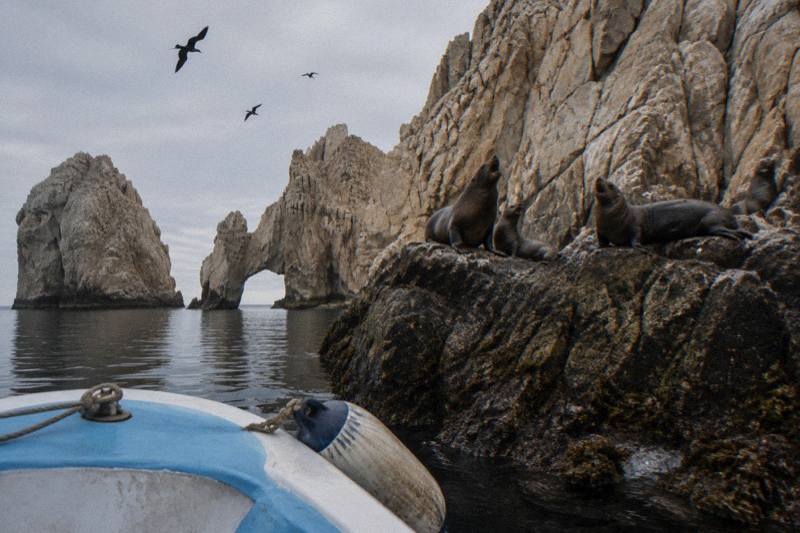
Why Is The Arch In Cabo So Famous?
Why the Arch at Land's End became Cabo San Lucas's most photographed landmark, what it is made of, and how to see it from the water.
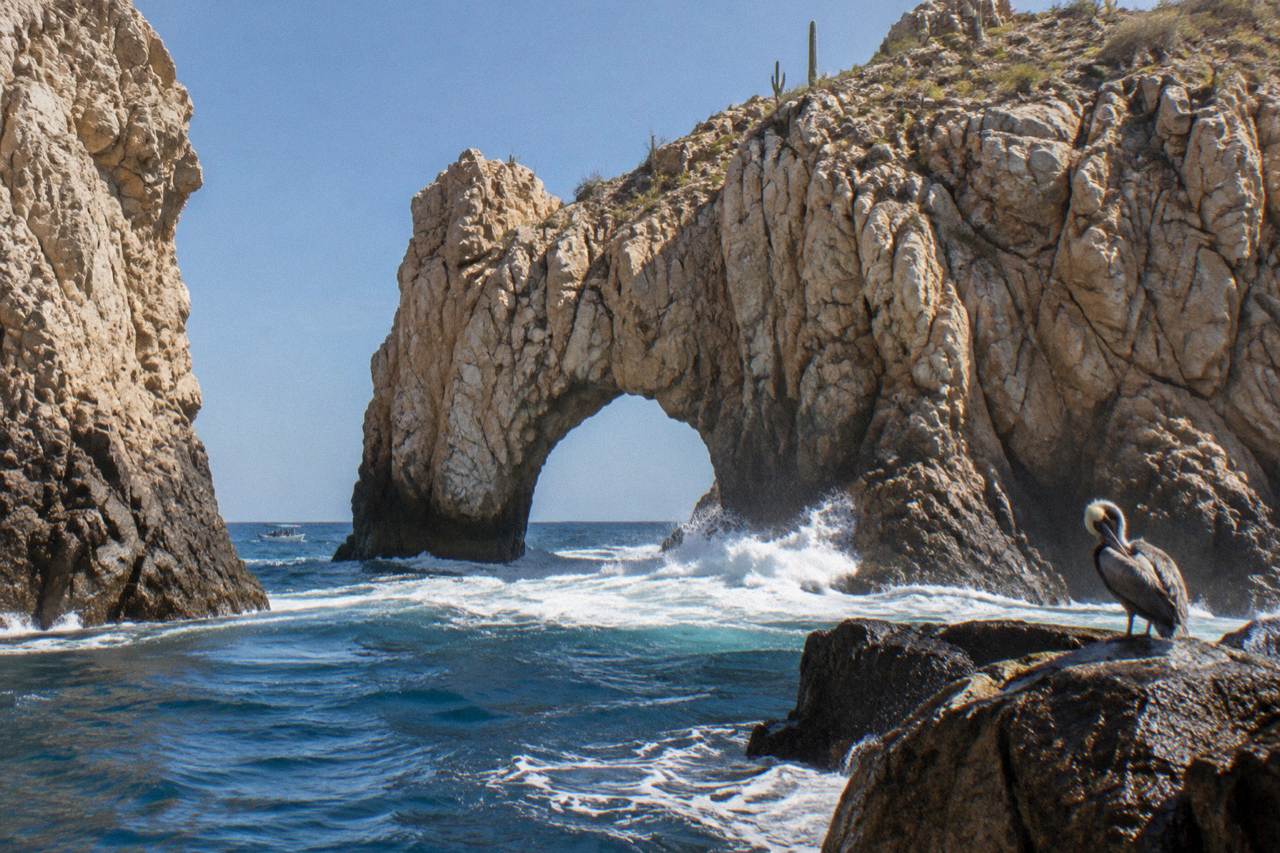
It sits inside a federally protected flora and fauna area, it can only be reached by water, and it marks the spot where the Pacific Ocean and the Sea of Cortez meet. That combination, a dramatic natural sculpture, a protected status and a boat-only location at the junction of two bodies of water, is what turned a rock into a destination. Almost every sunset cruise on this site's roster, from the 2-hour open-bar trimaran to the private yacht charters, routes past it.
The Arch is famous because it stands at Land's End, the exact southern tip of the Baja peninsula where the Pacific Ocean meets the Sea of Cortez, and it can only be seen properly from the water. Boat tours, sunset cruises, water taxis and cruise ship tender routes all converge on it, so nearly every visitor to Cabo San Lucas ends up in front of it with a camera.
Fame on that scale usually needs a photograph doing the work, and the Arch has been photographed from the sea for decades. The formation is a natural granite arch wide enough for a small boat to pass through when conditions and regulations allow, framed by open ocean on one side and sheltered bay on the other. At sunset the granite goes warm and orange against the sky, which is why so many sunset sails, including the shared sailing cruise rated 4.9 from 821 reviews at from $96 per person, time their departures to be near Land's End in the final hour of daylight.
The second reason is geographic drama. Stand anywhere on the point and you are looking at two oceans' worth of horizon: the cold, rough Pacific pushing in from the west and the calmer, warmer Sea of Cortez wrapping around from the east. The Arch sits right on the seam. The contrast is not subtle. Divorce Beach, on the Pacific side of the headland, is described in current visitor guides as dangerous for swimming because of strong currents, while Lover's Beach a few steps away on the Sea of Cortez side is generally suitable for swimming on calm days. One rock spine, two completely different seas.
Third, the Arch is protected. It sits inside the Area de Proteccion de Flora y Fauna Cabo San Lucas, a federal natural protected area of 3,996.05 hectares of continental waters that also carries a World Heritage designation on the official CONANP page. Sea lions haul out on the rocks beside it, Pelican Rock nearby is a primary boat-access snorkeling zone, and the whole stretch is managed rather than left open. Protection does not make a landmark famous by itself, but it does mean the view stays uncluttered: no buildings, no piers, no development on the point.
If you want to see it the way most people do, these are the three shortest routes on the roster.
The first is a dedicated one-hour boat tour focused on the Arch itself and the sea lions on the neighboring rocks, rated 4.5 from 38 reviews and priced from $38 per person, the cheapest firm-priced trip on this site's roster. The third is a 2-hour shared sailing yacht cruise from the marina, rated 4.9 from 821 reviews from $96 per person, which pairs the Arch with an open bar of beer, wine and soft drinks. Each one answers the same need at a different budget and pace.
There is also a slower answer to the fame question worth naming. The Arch became iconic partly because cruise ships anchor in the bay directly beside it. Local reporting on the 2026 season describes record tender traffic and marina crowds on multi-ship days. The Arch is not just a landmark visitors seek out; it is the backdrop to the town's entire arrival choreography.
Where Exactly Is The Arch And What Is Land's End?
The Arch stands at Land's End, the rocky point at the southern tip of the Baja California peninsula, immediately west of Cabo San Lucas Bay and about a ten minute boat ride from the marina. It is inside the federal Cabo San Lucas protected area, beside Lover's Beach and Divorce Beach, and there is no land access at all.
Land's End is the name for the whole granite headland, and the Arch is its most recognizable feature. Current visitor guides are consistent on the practical point: access to Playa del Amor, or Lover's Beach, Divorce Beach and El Arco is by water taxi or boat only, because cliffs and private land close the point off from land. Visitors arranging their own water taxi, a route covered in detail in our water taxi guide to Lover's Beach, should confirm the return pickup time before disembarking, since there is no cell service on the beach.
The geography in one sentence: the Sea of Cortez side holds the sheltered water, the swimming beach and the snorkeling at Pelican Rock; the Pacific side holds Divorce Beach, strong currents and the open ocean swell. The Arch sits between them, and boats approach it from the bay side.
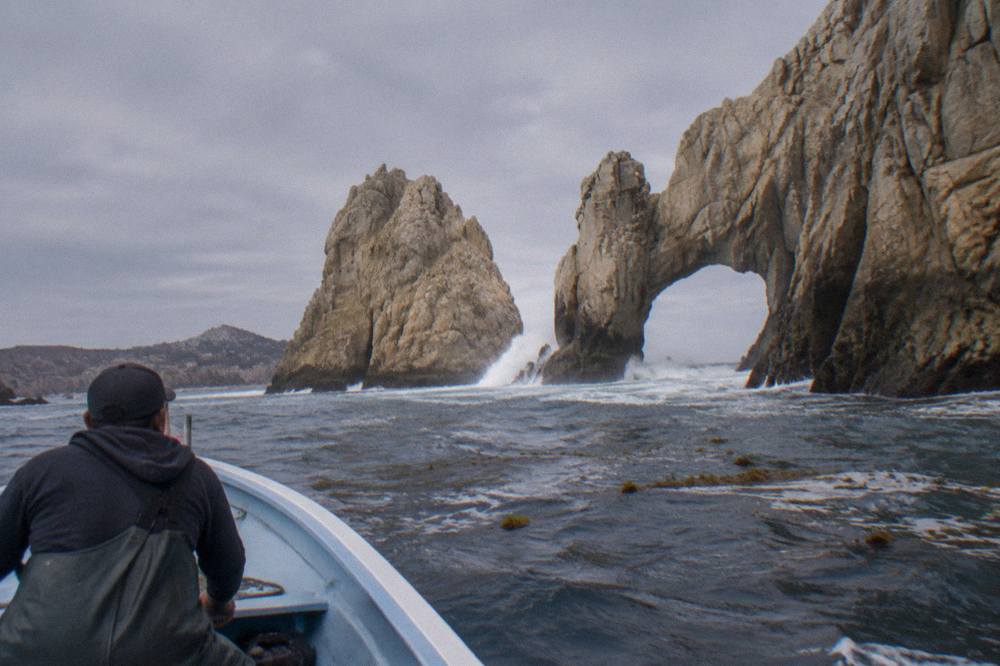
What that means for choosing how to see it is simple. A cruise that departs the marina, whether a one-hour run or a 2.5-hour dinner trip, reaches the Arch within the first leg of the trip and typically holds position nearby while passengers photograph it. The one-hour El Arco sunset boat tour from $38 per person is built entirely around this: out of the marina, around the point, past the sea lion colony, and back. Longer cruises add the open bar, the meal or the music, but the Arch is the shared centerpiece. If the landmark itself is the priority rather than the evening out, the short dedicated tour is the honest pick, and the one-hour Arch and sea lion boat tour covers it in the smallest time commitment on the roster.
The immediate neighborhood of the Arch, in summary form:
| Feature at Land's End | Side | Character |
|---|---|---|
| El Arco | Junction of both waters | Granite arch, boat viewing only, small craft historically pass through when conditions and rules allow |
| Lover's Beach (Playa del Amor) | Sea of Cortez side | Sheltered sand pocket, generally suitable for swimming on calm days, boat-only access |
| Divorce Beach | Pacific side | Strong currents and rip tides, no swimming recommended, photo spot only |
| Pelican Rock | Sea of Cortez side | Primary boat-access snorkeling zone, sea lions and tropical fish, depths of roughly 3 to 6 meters |
| Sea lion colonies | Rocks flanking the Arch | Resident colony, commonly viewed from tour boats, no landing |
Thinking about timing the light? The sun sets early here in winter, around 5:33 PM in early December per the sunset tables in our sunset times by month guide, and cruise departure slots shift with the season to match.
What Is The Arch Made Of And How Was It Formed?
The Arch is wind-and-wave-carved granite, part of the same rocky spine as the rest of Land's End. Ocean waves attacking the cliff line over a very long time wore a weak joint in the rock through into an opening, leaving the arch shape standing in the surf. The formation is still being reshaped by the sea and by storms, which is why landing rules and approach limits exist.
Granite at the tip of a peninsula is a specific geological setting. The Baja peninsula was formed by the same tectonic stretching that opened the Gulf of California, and the hard granitic rock at Land's End resisted erosion better than softer material around it. Waves coming from two directions, Pacific swell from the west and Sea of Cortez chop from the east, work on the headland from both sides. Where the rock had cracks and joints, the sea excavated, and the Arch is the surviving frame of that excavation.
The formation is sometimes called "El Arco de Cabo San Lucas," and the point as a whole is Land's End, a name sailors gave the last scrap of the peninsula before open Pacific. The Arch is not a sea stack that detached, and it is not man-made reinforcement; it is the remaining bridge of a cliff section whose flanks eroded away. Its opening is wide enough that small vessels have historically passed through, though whether a boat passes through on any given day depends on conditions, swell and the restrictions in force, so no tour can promise it.
The same erosion story explains the beaches beside it. Lover's Beach and Divorce Beach are both sand pockets trapped between granite walls, one facing each body of water, with completely different wave climates a few dozen meters apart. Pelican Rock, the snorkeling zone nearby, is a submerged granite slope with reported depths of roughly 3 to 6 meters, sea lions and tropical fish around it. The whole protected area, 3,996.05 hectares of continental waters per the official CONANP page for the park, exists because this geology supports a dense concentration of marine life at the meeting point of two seas.
In practice that means boats may face approach limits or guided-only rules near the Arch in peak whale months, a detail worth knowing if your trip falls between mid-December and mid-April.
Can You Walk To The Arch Or Do You Need A Boat?
You cannot walk to the Arch. Current sources are unanimous that Lover's Beach, Divorce Beach and El Arco are reachable only by water taxi or boat, because cliffs and private land block every land route. Your options are a shared water taxi, a dedicated boat tour, a sunset cruise, or viewing the formation from shore at a distance.
The water taxi is the budget route. Shared round-trip fares to the Lover's Beach and Arch area run roughly $15 to $20 per person, about 300 to 400 MXN, according to 2026 local reporting, and boats leave from the marina and Medano Beach. Two cautions from the same reporting: agree the return pickup time before you step off, since there is no cell service on the beach, and expect touts to open higher than the fair rate, so confirm the price first. Landing itself depends on conditions; in October 2026 the port authority restricted disembarkation at Playa del Amor during a period of elevated swell under a yellow flag, which is a routine occurrence, not an anomaly. On those days boats still view the Arch from the water but cannot put passengers on the sand.
The tour route is the more comfortable one and, per hour, not much more expensive. The difference between a $15 water taxi and the one-hour Arch tour from $38 per person is that the tour circles the formation, pauses at the sea lion rocks and returns you to your departure dock on a schedule, while the water taxi drops you and comes back later. Neither can promise passing through the Arch or landing on any given day.
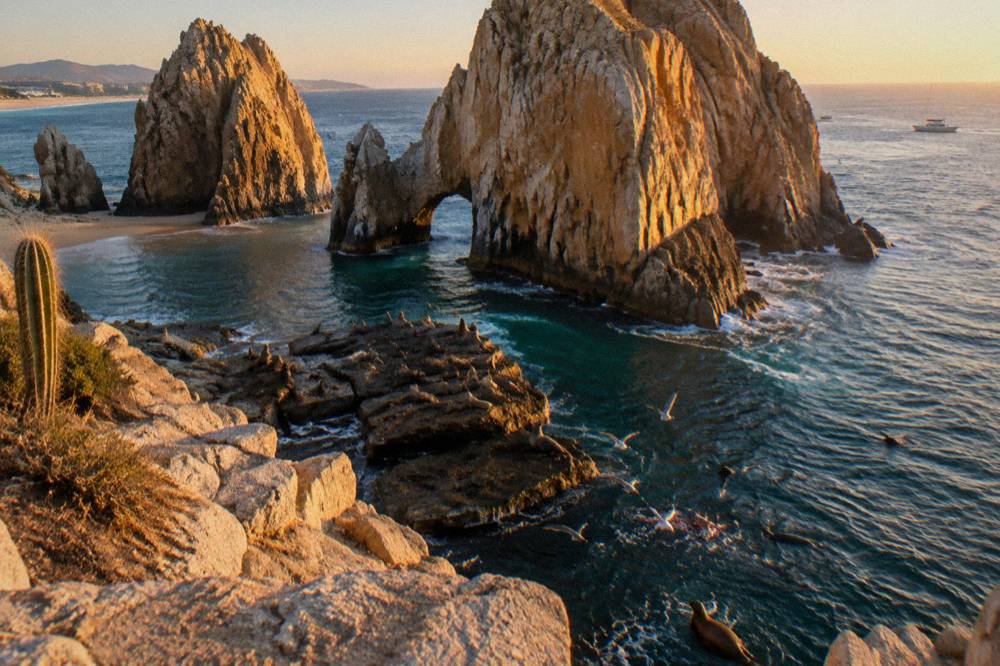
Then there is the viewing-from-shore answer, which costs nothing. The Arch is visible at a distance from several vantage points around the bay, and our free things to do in Cabo San Lucas guide lists the honest shore viewpoints. But distance is distance: from shore you see the silhouette, not the arch opening or the sea lions. This is the honest case for a paid boat, and it applies even to travelers otherwise on a strict budget.
For travelers deciding between the formats, here is how the three main boat options compare.
| Option | Typical time | Price basis | What you get at the Arch |
|---|---|---|---|
| Shared water taxi | Drop-off and return, your timing | Roughly $15 to $20 per person round trip, per 2026 local reporting | Beach time beside the Arch if landing is permitted; no tour, no commentary |
| One-hour Arch boat tour | 1 hour | From $38 per person, rated 4.5 from 38 reviews | Circle of the Arch, sea lion rocks, marina return on a fixed schedule |
The sunset cruise row deserves one flag. The 2-hour open-bar trimaran at from $69, rated 4.9 from 1,774 reviews, is the most reviewed short option that still routes past Land's End.
What Does The Arch Look Like From A Sunset Cruise?
From a sunset cruise the Arch reads as a dark granite silhouette against an orange sky, with the Pacific horizon behind it and the lights of the marina starting up across the water. Boats typically hold position near Land's End for the color change, and sea lions on the adjacent rocks are commonly visible from the deck. No cruise can promise specific colors or wildlife on a given evening.
The viewing sequence on a typical evening sail runs marina, bay, point, Arch, pause. The 2.5-hour luxury sunset sail with light appetizers and an open bar, rated 4.8 from 2,433 reviews and the most reviewed listing on this site's roster, from $82 per person, is a calm-boat version of this: drinks and snacks on a sailboat rather than a party deck. The experience of the Arch itself is roughly identical across all of them; what differs is the boat, the crowd and the drink package.
Golden hour here lasts roughly 40 to 48 minutes depending on the month, per current golden-hour data for Cabo San Lucas, and civil twilight runs about 20 minutes past sunset. That is the window cruises are built around. In mid-October, sunset sits near 5:49 PM and twilight ends around 6:11 PM, so a cruise departing the marina around 4:30 or 5:00 PM reaches the point with light to spare.
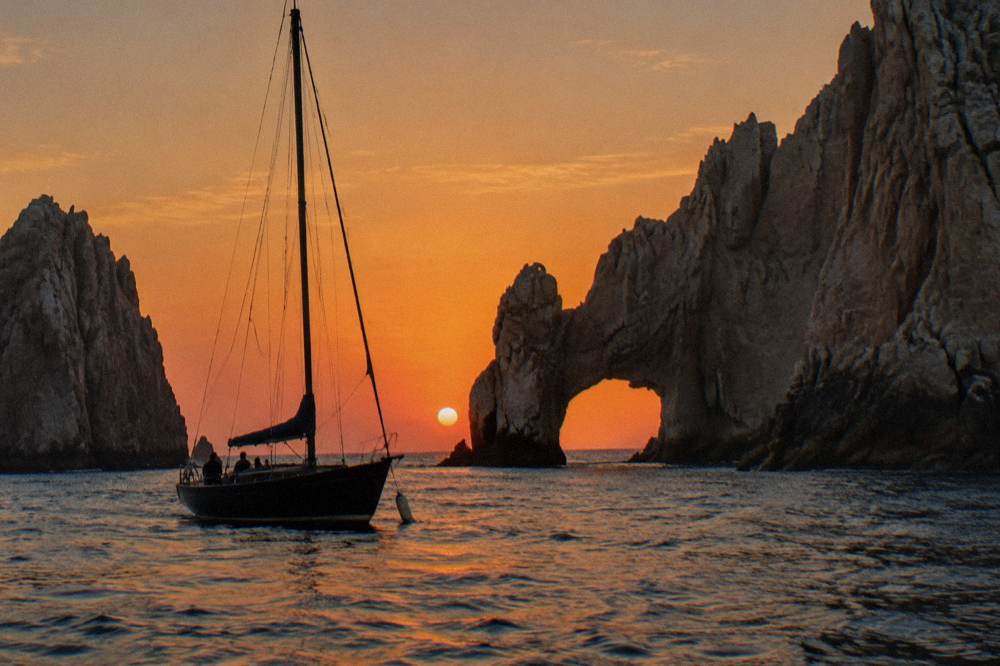
The shared sunset sailing cruise, from $96 per person with unlimited beer, wine and soft drinks listed, boards at F Dock in the marina and is a frequent pick for travelers who want the Arch photograph without the party-boat volume. For that matter, party-boat volume has its own listing: the Pez Gato sunset party cruise, from $82 and rated 4.5 from 271 reviews, passes the same rocks with a DJ. The Arch does not discriminate.
One planning note for winter travelers: the same waters host whales from roughly December through April as operators and guides report, and the sunset whale watching cruise with open bar, a 3.5-hour listing, runs in that window. Off-season it is simply not a whale trip; the listing sets what is offered. Sighting promises are never honest in either direction, so treat any whale mention on an Arch cruise as a possible bonus, not a feature.
When Is The Best Time Of Day To See The Arch?
Mid-to-late afternoon gives the calmest water and the fullest light on the rock face, while sunset gives the silhouette and the sky. Morning runs are typically smoother for photography of detail, and summer departures shift about an hour later than winter ones. The right answer depends on whether you want to study the Arch or photograph it against color.
The mechanics are simple. The Arch faces roughly into the setting sun across the Pacific, so in the last hour of daylight the formation turns into a dark shape against the sky, which is the classic postcard frame but loses surface detail. Earlier in the afternoon, sun from the east lights the granite from the bay side and the texture, the sea lions and the water color all read better. Cruises depart accordingly, with 2026 listings showing winter departures around 5:00 PM and summer departures around 6:00 PM.
Crowds follow the cruise ship calendar more than the clock. Local reporting on the 2026 season describes the marina boardwalk and lower Medano Beach as busiest roughly 10 AM to 3 PM on multi-ship days, thinning out as tender passengers reboard. A late-afternoon or sunset departure therefore usually shares the point with fewer boats than a midday water taxi run, though no one controls how many operators choose to hover at Land's End on a given evening.
Season matters less than people expect. The Arch is a year-round landmark, and every cruise on the roster runs past it in every month. What changes is the clock: sunset moves between roughly 5:30 PM in early winter and after 7 PM in summer, per the tables in our sunset-by-month guide, and operators shift their departure times to match. Swell is the other variable, since autumn Pacific swell, not rain, is what most often disrupts small-boat days, and the port authority can restrict smaller vessels on a weather alert. When that happens tours cancel or reschedule per each listing's terms, and most listings on the roster carry free cancellation.
Do You Need A Permit Or Wristband To See The Arch?
The Arch is inside the Area de Proteccion de Flora y Fauna Cabo San Lucas, which charges 125 MXN per person per day and requires a visible wristband. Most organized tours handle access as part of the trip, but whether the fee is included is stated only on each listing, so check it before booking rather than assuming.
The fee structure comes from the official CONANP record. Entry is 125 MXN per person per day; the protected area is open every day of the year. Exemptions apply to adults over 60, people with disabilities and children under 12 with proof at entry, and discounts of 75 percent go to students and teachers with valid ID while Mexican nationals and foreign residents of Mexico receive 50 percent off with official documents. CONANP announced the 2026 fee schedule on January 2, 2026 and reiterated that visitors must wear the visible wristband, obtained digitally or on site, for boat access to the El Arco and Playa del Amor area, as stated on the official CONANP announcement.
For cruise passengers and tour customers this is usually invisible: operators running inside the protected area operate under its rules. For independent water taxi riders it is not. Confirm with the boat operator whether the wristband is included in your fare or arranged at the dock, and carry the small cash amounts these local fees require. Two other rules from the current record: biodegradable sunscreen only in the protected zone, and boats view the Arch and Lover's Beach from the water, with landing mechanics covered only as local rules specify.
Separately, foreign visitors staying more than 24 hours in Baja California Sur pay a state tourist tax of 488 MXN per person through the state portal; it is a separate line from the CONANP fee and is paid before or during your trip, not at the dock. None of this is complicated, but it is the difference between a smooth boarding and a scramble for pesos at the marina gate.
Which Boat Trip Should You Book For The Arch?
Book the one-hour Arch and sea lion tour from $38 per person if the landmark is the whole point; book a 2-hour open-bar sail from $69 to $96 if you want the evening out that happens to include it; book a dinner cruise or private yacht if the Arch is one stop in a bigger plan. Every one of them reaches the formation.
The decision is about the wrapper, not the rock. Travelers who only need the photograph and the sea lions can be back at the marina within the hour on the dedicated tour, rated 4.5 from 38 reviews. Travelers building an evening around it have a ladder of options: the open-bar trimaran at from $69 and rated 4.9 from 1,774 reviews, the luxury sailing sunset tour from $119 rated 4.9 from 115 reviews, the Pacific jazz-and-wine catamaran from $139, and upward through the dinner cruises and private charters. Families often land on the dinner formats, like the Mexican buffet cruise with live music rated 4.4 from 936 reviews from $95 per person, because the meal anchors the trip for kids and the Arch pass happens anyway.
The 2-hour open-bar trimaran from $69 per person is the volume pick for a reason: unlimited drinks, bottled water, sodas and juices are listed inclusions, boarding is at Muelle Principal in the marina, and free cancellation is listed. Groups and celebrations push toward the private side of the roster, where the private yacht tour for one to twenty people runs 3 hours from $999 per group with dinner and drinks, rated 5.0 from 119 reviews, and a second yacht option departs from Chileno Bay from $799 per group for those staying on the corridor.
Cancellation terms deserve a glance before you book rather than after. Free cancellation is listed on nearly every trip above, with the budget booze cruise being one exception where cancellation terms are not stated, and weather-driven port closures are handled per listing. The honest summary of the whole roster: the Arch does not change, your budget and your evening do. Pick the wrapper.
For a deeper comparison of formats, our Cabo boat tours compared guide breaks down the full roster side by side, and Cabo Sunset Cruises keeps the complete listing set current across sails, dinner cruises, party boats, private charters and whale combos.
Common Questions About The Arch In Cabo
Why is the arch in Cabo so famous?
It stands at Land's End, the exact tip of the Baja peninsula where the Pacific meets the Sea of Cortez, it can only be reached by boat, and it sits inside a federally protected area beside sea lion colonies and two contrasting beaches. Nearly every cruise and water taxi converges on it, so it became the town's defining image.
Can you walk to the Arch in Cabo San Lucas?
No. Current sources agree that Lover's Beach, Divorce Beach and El Arco are accessible only by water taxi or boat, because cliffs and private land block land routes. Viewpoints on shore offer a distant silhouette only.
Can a boat pass through the Arch?
The opening is physically wide enough for small vessels, but passing through depends on sea conditions, swell and any navigation restrictions in force that day. No tour can promise it, and during whale-season restricted zones boats may need to keep greater distance.
Do you have to pay a fee to visit the Arch?
The Arch sits inside a federal protected area with an entry fee of 125 MXN per person per day and a required visible wristband. Children under 12, adults over 60 and people with disabilities are exempt, and students, teachers and Mexican nationals receive discounts with ID. Check whether your tour includes it.
What is the cheapest way to see the Arch by boat?
A shared water taxi runs roughly $15 to $20 per person round trip per 2026 local reporting, though it drops you at the beach rather than touring the formation. The cheapest firm-priced tour on this roster is the one-hour Arch boat tour from $38 per person.
Can you land at Lover's Beach next to the Arch?
Sometimes. Disembarkation can be suspended on high-swell days, as happened under a yellow flag in October 2026, and the Pacific-side Divorce Beach is not safe for swimming in any conditions. Confirm sea conditions with your operator before planning a drop-off.