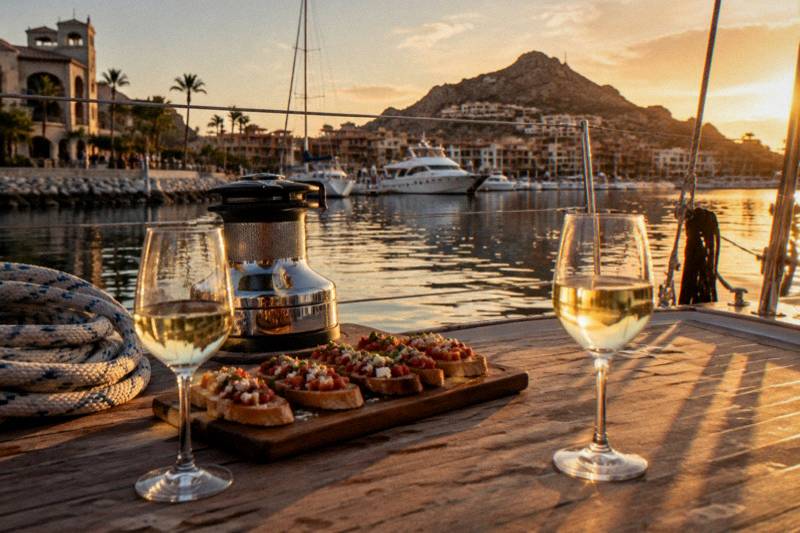
Cabo San Lucas Weather By Month: Sea, Wind And Evening Temperatures
Sea temperature, evening breeze, rain risk and hurricane season decide whether a sunset cruise in Cabo San Lucas feels like bathwater calm or a bumpy ride. Here is how the year breaks down, month by month.
Short answer
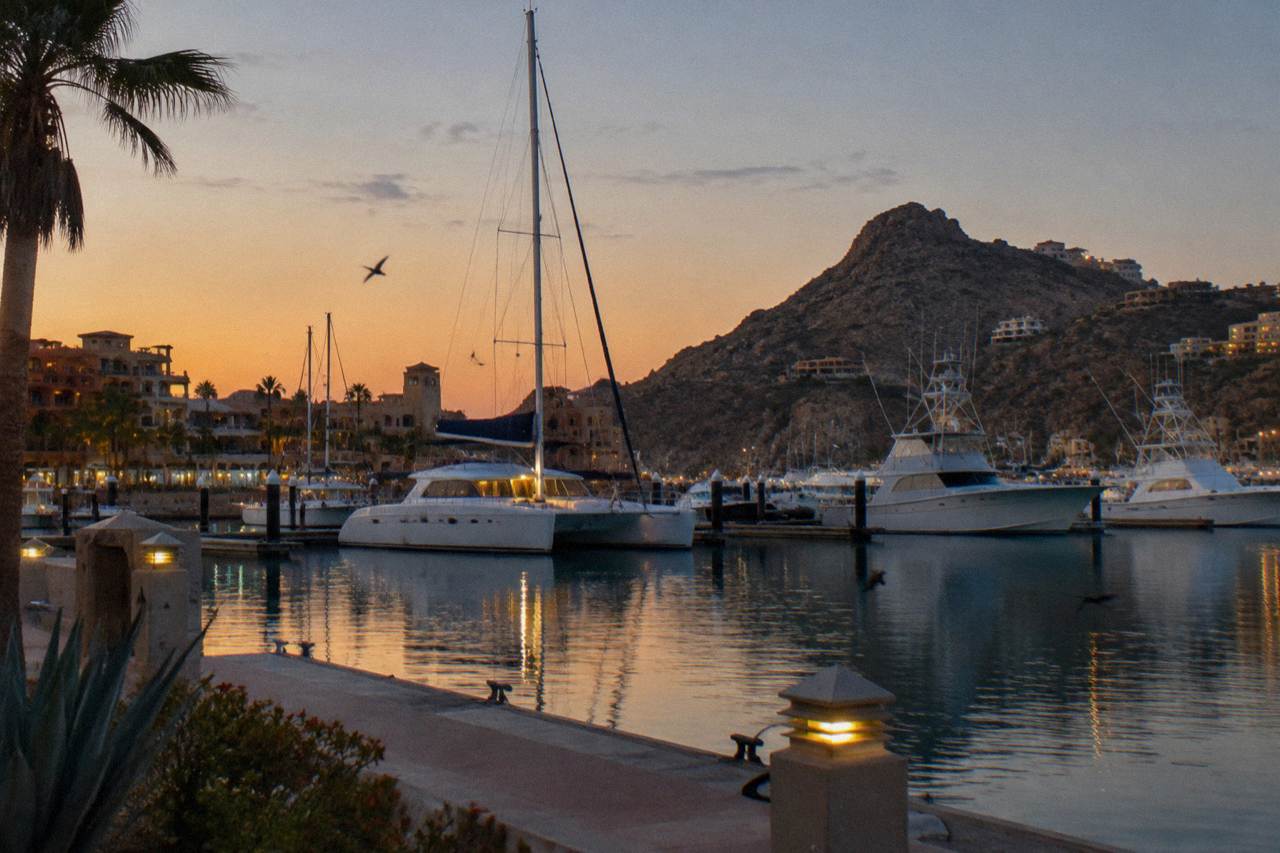
Cabo San Lucas stays warm year-round, with sea temperatures that range from the low 70s Fahrenheit in late winter to the mid 80s by late summer, and almost no rain outside the late-summer storm window. Sunset shifts between roughly 5:33 PM in early December and about 7 PM in midsummer. The main planning risk is hurricane season, May 15 to November 30.
Cabo San Lucas sits at the tip of the Baja peninsula, where the Pacific meets the Sea of Cortez, and the meeting of those two waters is what the weather actually feels like on a boat. The town is warm in every month of the year. What changes, and what should shape when you book a sunset sail, an open-bar trimaran trip or a whale watching departure, is the sea temperature, the strength of the afternoon breeze, the small chance of rain and the wider hurricane season that runs in the background from late spring to the end of November. Since whale watching is the one trip on that list that only runs in certain months, our guide to the best month to see whales in Cabo San Lucas spells out when humpbacks arrive and when boats are allowed out.
This guide walks through those variables month by month. Along the way it ties each one back to the cruises that run in that situation, because a weather fact without a boat attached to it is just trivia. If you are choosing a date rather than a vessel, the deeper comparison in our best months for Cabo boat tours guide is the companion piece.
What Is The Weather Like In Cabo San Lucas Throughout The Year?
Cabo San Lucas has a desert climate with two real seasons rather than four: a warm, dry stretch from roughly November through May, and a hotter, more humid stretch from June through October when sea temperatures peak and the hurricane season is active. Air highs sit in the 80s Fahrenheit for most of the year, the sea stays swimmable in every month, and rain is rare enough that most visitors never see it.
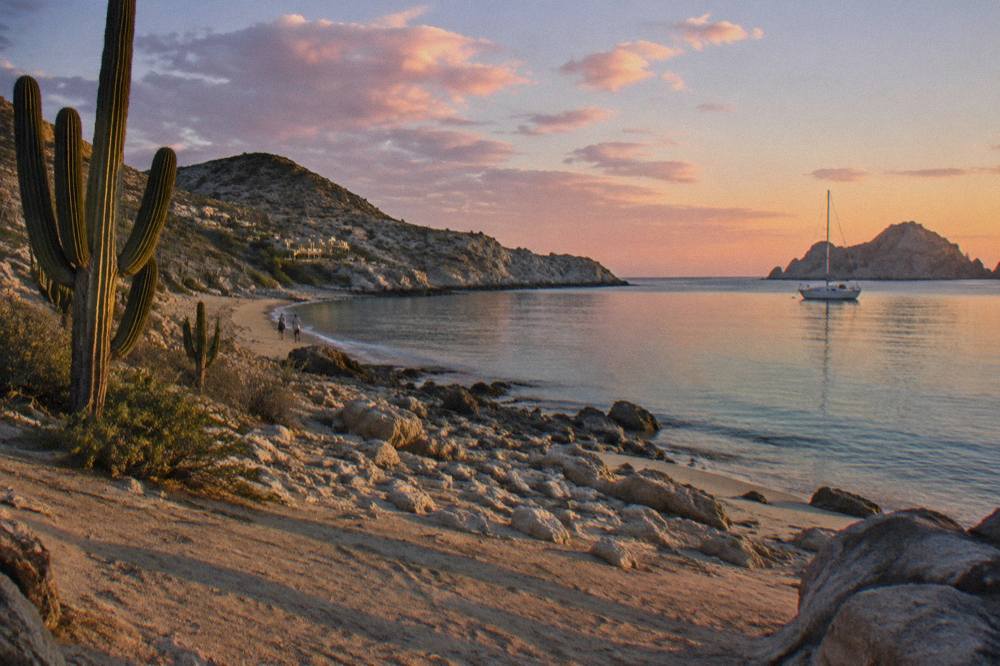
The dry months are the ones most people picture when they picture Cabo. From late autumn through spring the air is warm but not heavy, evenings on the water can want a light layer, and the sky is reliably clear enough that sunset cruises sell out weeks ahead around the holidays. The shared sunset sailing cruise that departs from F Dock in the marina, rated 4.9 from 821 reviews and from $96 per person, runs through this whole stretch, and its two hours are timed to put the boat off Land's End as the light drops.
Summer shifts the character. Air temperatures climb, humidity rises with the sea, and the water in the bay can feel like a warm bath. Cabo San Lucas reported a sea temperature of 30.89 degrees Celsius on October 20, well above the ten-year average of 28.77 for that date, which tells you how warm the late-season water can run. Cruises still sail daily in summer; the open-bar sunset cruise with snacks, from $69 per person and rated 4.9 from 1,774 reviews, is a summer-friendly format because the evening departure dodges the strongest heat of the day.
| Season | Typical character | What it means for a cruise |
|---|---|---|
| November to February | Dry, warm days, cooler evenings | Bring a layer for the ride back after sunset |
| June to August | Hot, humid, warmest sea | Evening departures are the comfortable choice |
| September to October | Peak storm-season influence, still hot | Watch marine forecasts, book with free cancellation |
The practical takeaway is that there is no bad month for the water itself. The differences that matter are comfort on deck, crowd levels at the marina and Medano Beach, and the small but real chance that a distant storm forces a reschedule in the late-summer window.
How Warm Is The Sea At Cabo San Lucas Beaches Each Month?
Sea temperature in Cabo San Lucas follows a smooth annual curve, coolest in the late winter and early spring and warmest by late summer. Long-term reporting puts the October mean around 28.6 degrees Celsius, with an actual mid-October reading of 30.89 degrees, while the coolest months run several degrees lower. For swimmers and snorkelers that means bathwater from July through October and refreshingly cool, not cold, from January through April. Evenings on that warm water are hard to leave, so a quick look at what time the sun sets in Cabo San Lucas in October will help you time a boat ride for golden hour.
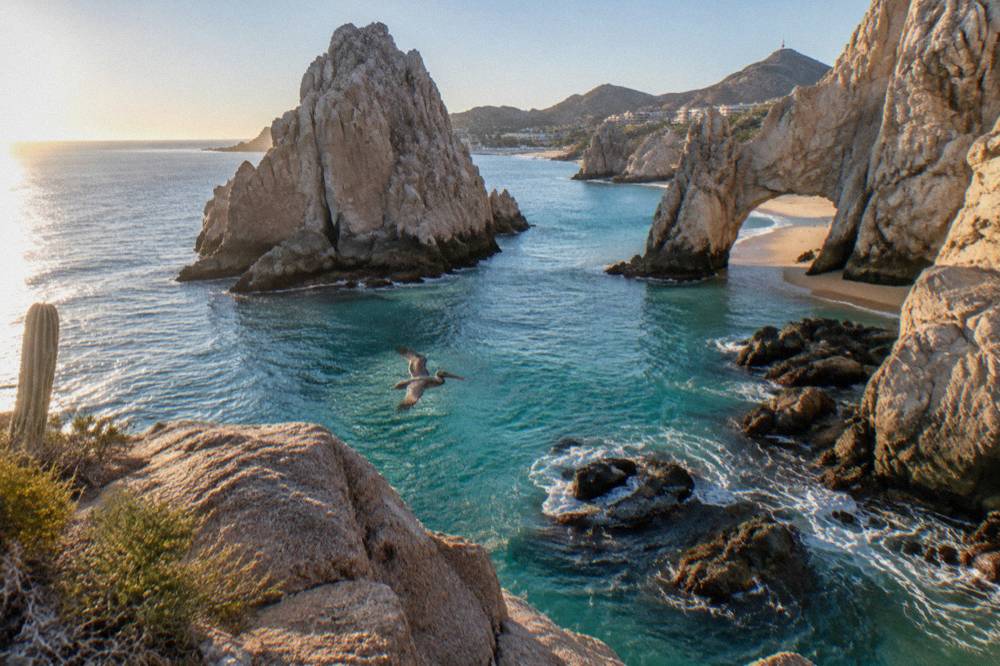
The Sea of Cortez side, where Medano Beach and the sheltered water near the Arch sit, warms faster and holds heat longer than the Pacific side. That difference is why a sunset cruise can round Land's End and move from glassy, warm water into a noticeably cooler breeze in the space of a few minutes. Operators and guides describe the Lover's Beach side as generally suitable for swimming on calm days, while the Pacific-facing Divorce Beach side carries strong currents and is not recommended for swimming at any time of year.
For cruise comfort, sea temperature matters mostly through the air above it. Warm late-summer water feeds humidity, so an August evening sail feels tropical and a February one can want a jacket by the last half hour.
| Period | Sea character off Cabo San Lucas | Comfort notes for boat tours |
|---|---|---|
| January to March | Coolest of the year, still swimmable | Evening breeze feels crisp; layers recommended |
| April to June | Warming steadily | Comfortable balance of warm sea, dry air |
| July to September | Warmest water of the year | Humid on deck; evening trips more pleasant |
| October | Long-term mean about 28.6 degrees Celsius | Late-season warmth with the first cooler nights |
Two fees sit alongside any water-based plan near the Arch. The protected area around Cabo San Lucas, which includes El Arco and Lover's Beach, charges an entry fee of 125 MXN per person per day, with a visible wristband required, per the official CONANP protected area page. Whether a cruise includes that fee is stated only on each listing, so check before you board.
Given how much the sea and sky drive the evening, the format you pick matters as much as the date.
When Is Hurricane Season In Los Cabos And Can It Affect Boat Tours?
Hurricane season in the Eastern Pacific runs from May 15 to November 30, and Los Cabos sits inside that window, though direct hits on Cabo San Lucas are rare and activity typically drops sharply after mid-October. The realistic effect on a boat tour is not a storm strike but a closure or rescheduling: the port captain can suspend small-vessel navigation on a weather alert, and operators then cancel or rebook per each listing's policy.
That is the typical pattern: the town feels distant storms as swell and occasional port restrictions rather than wind damage. The practical rule is simple. Book tours that list free cancellation in the storm-season months, keep your plans a little flexible between August and early October, and expect that the vast majority of departures run exactly as scheduled. The National Hurricane Center's Eastern Pacific tropical weather outlook is the authoritative place to check what, if anything, is spinning offshore during your dates.
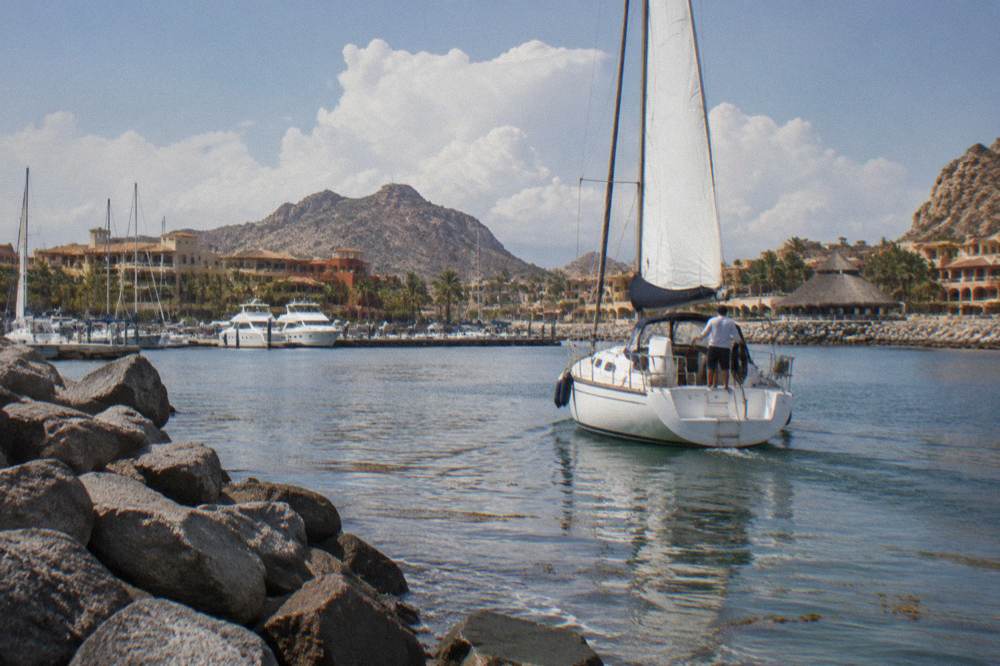
After mid-October the risk profile improves fast, and November is the quiet transition into the dry season that carries through spring.
A related point worth knowing: marine conditions and port status are decided by the harbor authority, not by tour operators. The U.S. National Weather Service publishes an offshore marine forecast for the Cabo San Lucas area covering winds and seas, useful if you want a second read on a swell forecast before a small-boat trip.
What Time Is Sunset In Cabo San Lucas By Month?
Sunset in Cabo San Lucas moves across a narrow band for a place this far south: roughly 5:33 PM in early December, about 5:49 PM in mid-October, and around 7 PM at the summer extreme, because the town keeps Mountain Standard Time year-round with no daylight saving changes. Cruise departures shift with the season, earlier in winter and later in summer, so the boat leaves the marina close to golden hour in every month.
The no-DST detail matters more than visitors expect. Clocks do not change in Cabo San Lucas, so sunset drifts slowly through the year instead of jumping an hour in spring and autumn. Mid-to-late October gives a sunset near 5:49 PM with civil twilight lasting until about 6:11 PM, and golden hour runs roughly 43 to 44 minutes in that month, which is the window a sunset cruise is built around. By the winter solstice the day shortens to about 10 hours 43 minutes of daylight, with sunset near 5:39 PM.
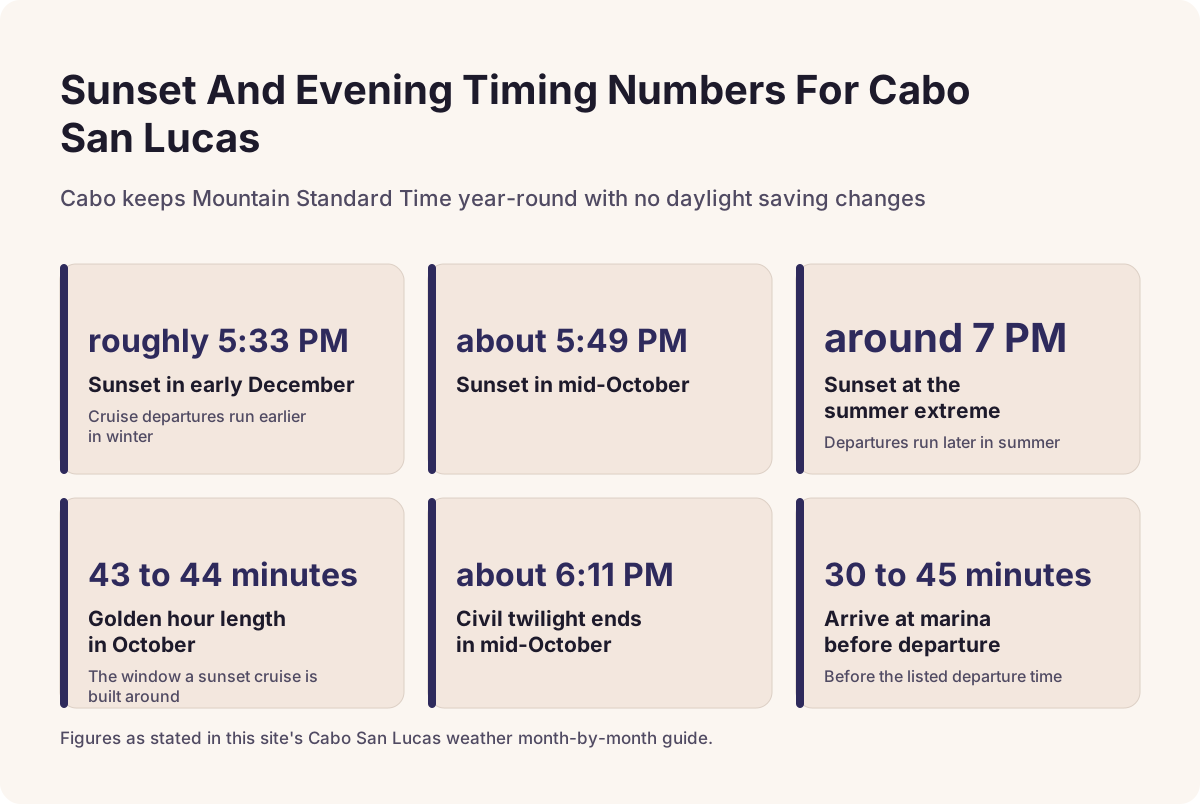
Golden-hour photography is the reason many people book the evening trip in the first place, and the timing arithmetic is forgiving: arrive at the marina 30 to 45 minutes before the listed departure, and the boat reaches the Arch as the light turns warm. Our full month-by-month breakdown lives in the sunset times in Cabo San Lucas guide, which pairs the clock times with what each stretch of the year feels like on the water.
For winter dates specifically, the early sunset works in your favor for the rest of the evening. A cruise that leaves the dock around 4:30 or 5 PM in December is back on the marina boardwalk by 7, in time for dinner at the restaurants a few minutes' walk from the boarding points described in our Cabo marina boarding guide.
When Is It Windiest On The Water Around The Arch And Land's End?
The breeziest stretch around Cabo San Lucas runs from late winter through spring, when consistent afternoon winds build over the Sea of Cortez and the Pacific side of Land's End can feel meaningfully blustery even on an otherwise clear day.
Wind is the variable that separates two boats on the same evening. The swells and gap winds of autumn can restrict smaller vessels even without a named storm nearby, a pattern repeated every year in local marine reporting. The two-hour open-bar trimaran cruise, from $69 per person and rated 4.9 from 1,774 reviews, handles a moderate breeze comfortably given its size and format, while the sailing yacht trips trade a bit more heeling and spray for the quiet of moving under canvas.
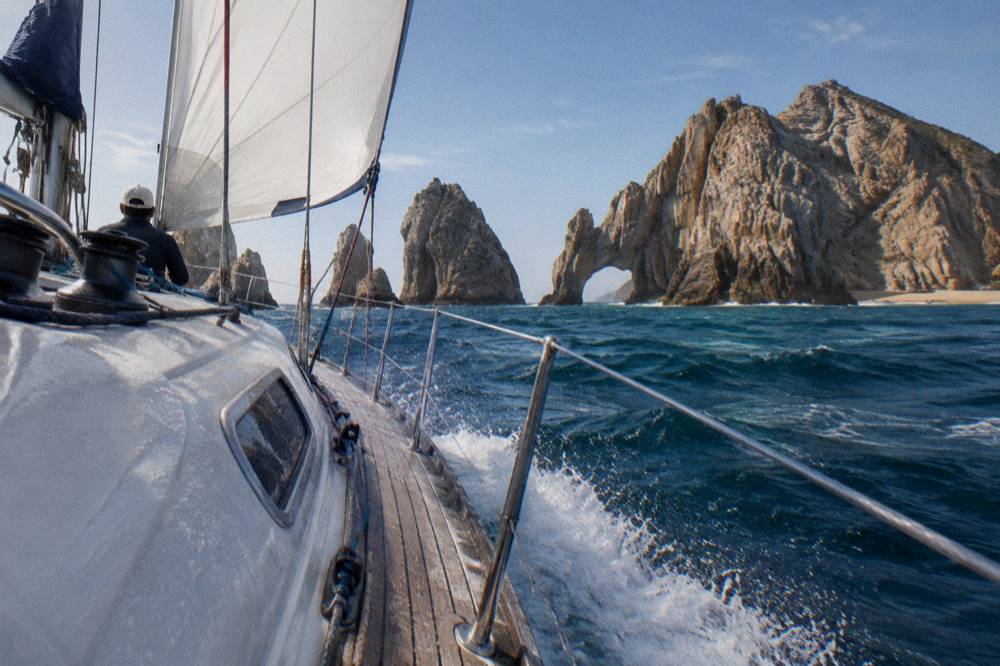
Around Land's End the geography concentrates the effect. Boats pass from the sheltered Cortez side, past the sea lion haul-out rocks, into open Pacific exposure within a few hundred meters, and the temperature and wind can change on the spot. Never expect a specific wind speed on a given evening; the marine forecast gives the range, and the crew makes the call on route.
For travelers who feel the motion, the practical guidance is to favor the larger and wider formats, catamarans and multi-deck vessels, on breezier spring dates and to save the smaller sailboats for the calmer summer and autumn evenings. Check the live listing for each product's vessel type before booking.
What Is The Best Month For A Sunset Cruise In Cabo San Lucas?
The most comfortable window for a sunset cruise in Cabo San Lucas is November through May, when the air is dry, the sea is calm more often, and evenings are warm without the humidity of late summer. December through March adds a possible bonus: whales are commonly reported in these waters in that stretch, and one dedicated sunset whale watching cruise, from $109 per person for 2.5 hours, pairs the golden hour with the season.
Every month sells, but they sell differently. The holiday weeks around Christmas and New Year fill earliest, with local hotel reporting pointing to occupancy above 90 percent at those peaks, so the popular boats, the sailing yachts and the dinner cruises, need booking well ahead. Late spring offers the same dry weather with thinner crowds and warmer evenings than midwinter. Summer belongs to the open-bar and party formats, where the heat is the point as much as the sunset.
| Month window | Conditions on the water | Cruises that fit it best |
|---|---|---|
| December to February | Dry, crisp evenings, whale season reported | Sunset whale watching cruise, shared sailing yacht |
| March to May | Dry, warm, breezier afternoons | Catamarans and larger shared vessels |
| June to August | Hot, humid, warmest sea, light winds | Open-bar trimaran and party cruises |
| September to October | Storm-season influence, thin crowds | Free-cancellation listings, flexible dates |
If that whale season window tempts you, our honest take on whether a Cabo whale watching cruise earns its price covers season dates, boat rules, and what tours really include.
In the December-to-April stretch operators and guides report whales commonly seen from Cabo boats, and this listing builds its whole 2.5-hour itinerary around that possibility, with wine and an appetizer on board. Outside that window it is simply a calm evening on the water, and the listing, not the calendar, sets what is offered on the day.
The Los Cabos Luxury Sunset Sail with Light Appetizers and Open Bar is the featured trip on Cabo Sunset Cruises for good reason, because it converts an ordinary clear evening into the arch-and-golden-hour run without demanding anything of the weather except that it hold.
Does It Rain Enough In Cabo San Lucas To Ruin A Cruise?
No, rain is a minor factor in Cabo San Lucas for most of the year: October, a transition month, averages only about 1.4 rain days, and the deep dry season from November through May can go weeks without measurable rain at all. When rain does arrive it usually comes in short, heavy bursts associated with tropical moisture in late summer rather than all-day soakers, and evening cruises often sail on days that started wet.
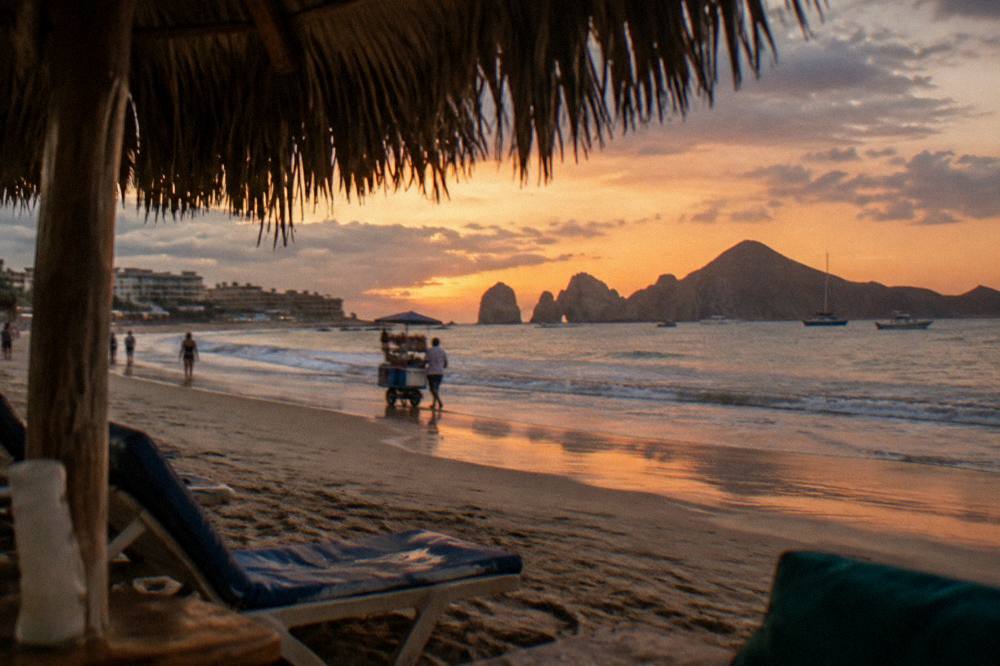
The desert geography explains it. The Pacific side of the peninsula is dry, the mountains behind town wring out what moisture arrives, and the classic Cabo weather complaint is sunburn, not rain. When a tropical system passes well offshore it can drag a day or two of cloud and showers across Los Cabos, and those are the same systems that occasionally close the port to small vessels, so rain and swell tend to travel together in late summer.
For planning, treat rain as a rounding error and swell as the real variable. Check the marine forecast if your dates fall between August and mid-October, book listings with free cancellation in that window, and otherwise trust the odds, which are heavily in your favor: a town that averages barely more than one rain day in a transition month like October is not a place where the sunset gets rained out often.
Common Questions About Cabo San Lucas Weather By Month
What is the hottest month in Cabo San Lucas?
Summer months, June through September, carry the highest air temperatures and the warmest, most humid conditions, with sea temperatures peaking in late summer. A mid-October reading of 30.89 degrees Celsius sat well above the ten-year average for that date. Evening cruises are the comfortable format in this stretch.
What is the coldest month in Cabo San Lucas?
January and February are the coolest months, with evening temperatures that can feel crisp on the water, and the sea at its annual low while still swimmable. Daytime highs stay warm. Bring a light layer for the last half hour of any sunset cruise.
When is hurricane season in Cabo San Lucas?
Eastern Pacific hurricane season runs May 15 to November 30, with activity typically dropping sharply after mid-October. Direct hits on Cabo San Lucas are rare; distant storms more often show up as swell and occasional small-vessel port restrictions. Book listings with free cancellation in that window.
What time is sunset in Cabo San Lucas by month?
Sunset runs from about 5:33 PM in early December to roughly 7 PM at the summer extreme, with mid-October near 5:49 PM, because Cabo San Lucas observes Mountain Standard Time year-round with no clock changes. Cruises shift departure times seasonally to match.
Does it rain often in Cabo San Lucas?
No. October, a transition month, averages about 1.4 rain days, and the dry season from November through May can go weeks without measurable rain. Most rain that does fall comes in brief tropical downpours in late summer rather than steady all-day rain.
Which month is best for a sunset cruise in Cabo San Lucas?
November through May offers the most reliable combination of dry air, calm evenings and comfortable temperatures. December through March adds commonly reported whale activity, served by a dedicated sunset whale watching cruise from $109 per person. Book earliest for the Christmas and New Year weeks.